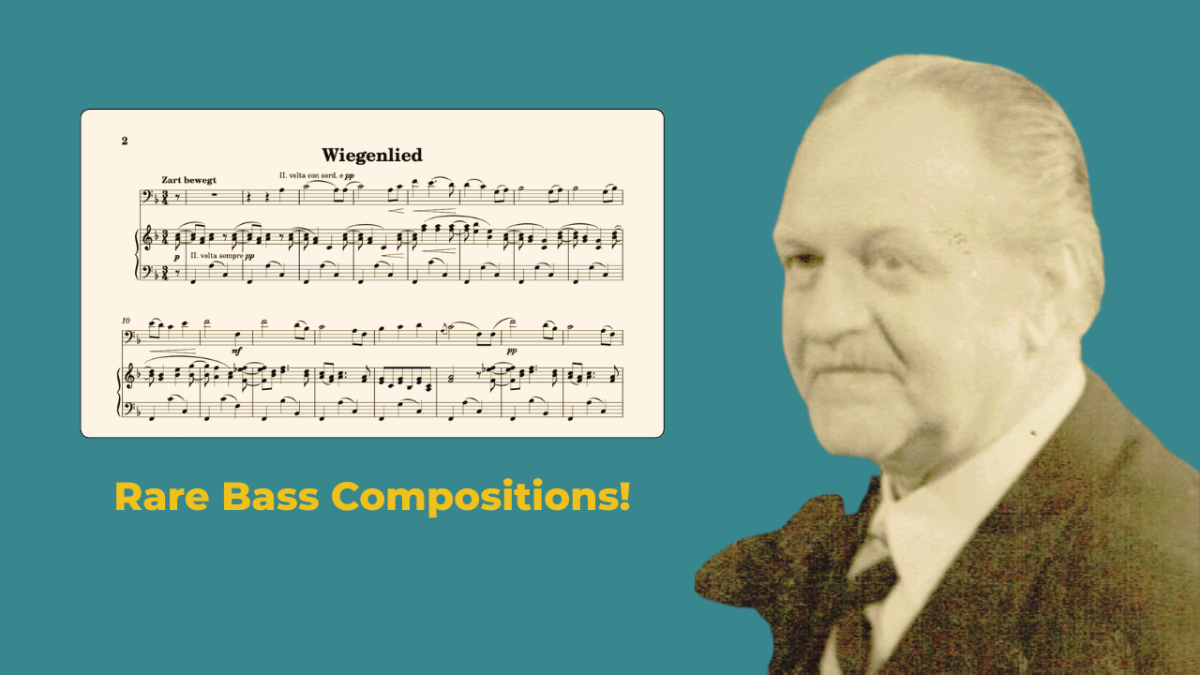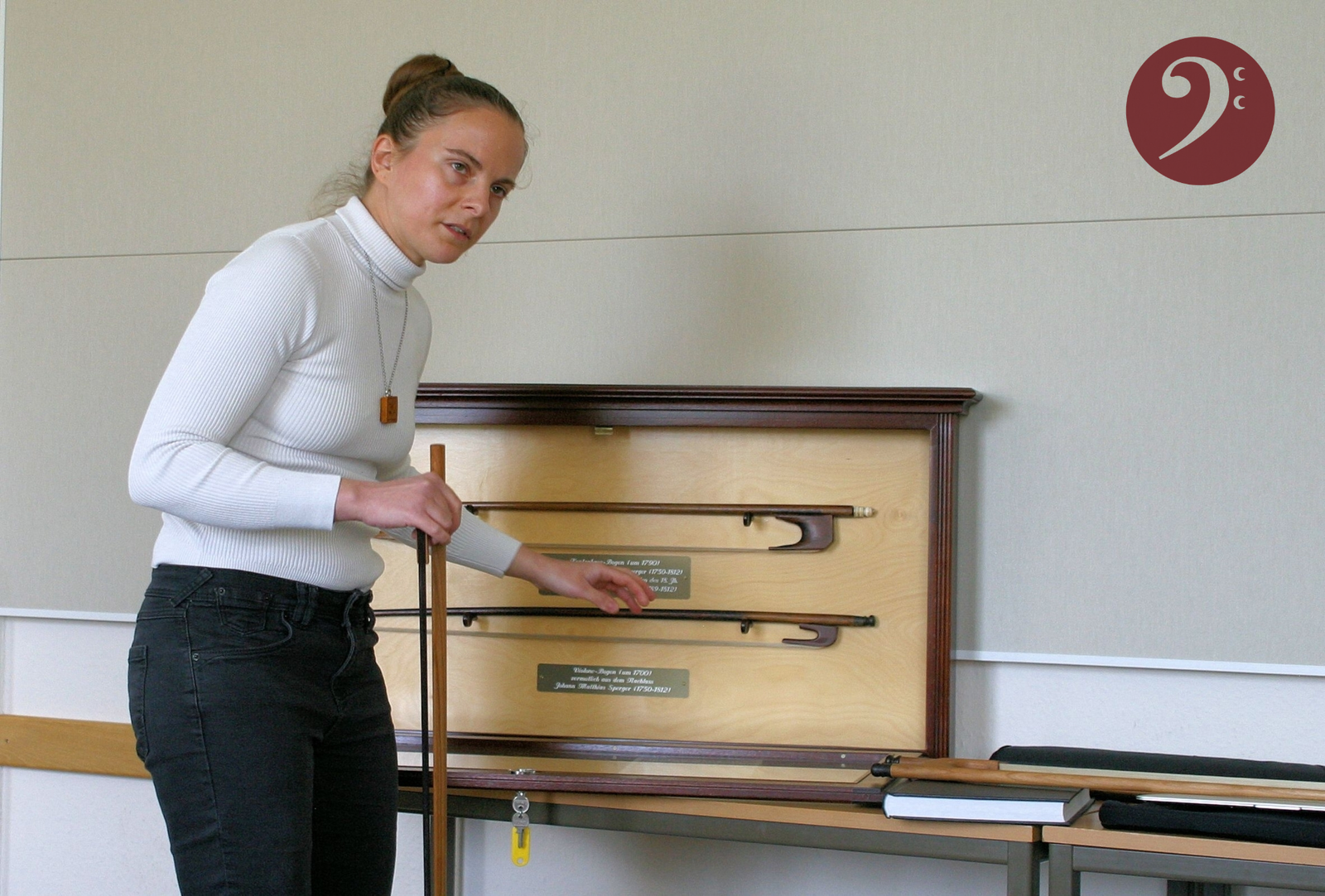
Darija Andzakovic is a freelance bassist and musicologist specializing in historical instruments, the Viennese bass, and the music of Johannes Matthias Sperger. While researching Sperger’s manuscripts for her doctoral dissertation, she discovered through melodic and handwriting analysis that the work long cataloged as Sperger’s Fifth Bass Concerto was actually composed by Ignaz Pleyel.
Darija joins Jason to trace this musical detective story, from deciphering 18th-century handwriting and reconstructing watermarks to exploring how Pleyel’s concerto may have influenced Sperger’s own music. They also discuss the tension between scholarship and performance, the practical musical education of the 18th century, and why historical evidence still leaves room for imagination.
Learn more about the concerto’s world premiere with Rob Nairn and the Australian Brandenburg Orchestra, explore Peter Walls’ History, Imagination and the Performance of Music and Clive Brown’s Classical and Romantic Performing Practice, and follow the discovery through Schola Cantorum Basiliensis on Instagram.
This conversation has been edited for clarity.
A Discovery Centuries in the Making
Jason: How cool to have made that discovery, to be a part of that — that’s really exciting.
Darija: I’m really grateful to Rob (Nairn) that he was so enthusiastic and motivated about it. To have someone who really wanted to push it over the line and get it performed — I’m just thrilled.
Jason: You’re like a musical detective. How cool to go back a few centuries and make a discovery like that. With the handwriting analysis — you could make a double bass or period instrument movie about this.
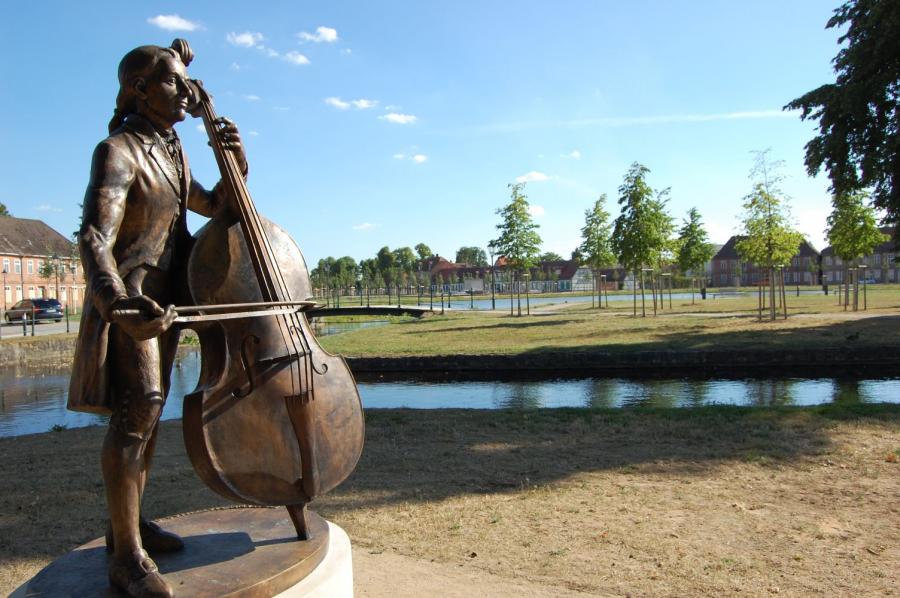
Darija: Oh, absolutely. So many funny things come up, especially in documents related to Sperger. Sometimes he leaves himself little notes with most of the information about a meeting that’s supposed to take place, and then he leaves out one crucial bit of information.
So we know, like, who, where, what floor, something is being handed over — but we don’t know what. We’re getting really, really close and then it just falls short of being useful. For example, during his Ludwigslust period, we have receipts for some modifications he made to a bass. We have the price for a new fingerboard, but that’s it. It would be really nice to know how long it was and what he was doing with that fingerboard, but instead it’s just “Griffbrett finished.”
From Modern Bass to the Violone: How It All Began
Jason: How did this field of study spark your curiosity? You mentioned you were studying modern bass and then became interested in period performance, early music, the violone. How did that come on your radar?
Darija: Well, I was at the end of my modern bass studies, and I was doing a side project while living in Auckland, New Zealand. During some national youth orchestra projects, you know how it is when bass players get together and have to joke about things.
So we were discussing the Dittersdorf concerto — everyone has to learn it for their auditions — and someone made the joke, “Oh, well, you could just play it in that Viennese tuning, and then it’s just open strings and harmonics.” It stuck with me, and I started to wonder: what is it like in that tuning?
I was very lucky to have a second bass available, so I set it up as a little side project with some steel strings, tuned the G string down to an F-sharp, put some frets on it, and just took my modern bow. When I played the opening of that concerto, the resonance was just really, really fantastic. I thought, “Oh, maybe they will laugh at me for this,” but at the haptic level, at the somatic level, it gives a really good vibe. So I just decided to stick with it.
But the real kicker for me was a recording of Sperger’s 15th Concerto on the modern bass by a Hungarian player, Zsolt Fervari. He recorded this double CD — I think it was 2006 — with the Vanhal Concerto and Sperger 15.
I’d been listening to the Vanhal Concerto because that was going to be on my recital, and then one day I thought, “Oh, maybe I could listen to the other concerto on that CD.” When I heard it, I felt joy. Which, to put it into context — I am an Eastern European. So this was a very particular, singular feeling for me, and I thought, “Wow, I can experience this without alcohol.”

Jason: I love it. That’s the quote for the episode. As a Polish-American descendant, I understand completely.
Darija: I just thought, I don’t really know where any of this is going to go, but in that moment, I had this really good feeling in my heart, and I thought, “I have to follow this.” And that’s how I got a bit more into Sperger. That was the point at which I slowly decided to actually study musicology. My master’s thesis was about his bass sonatas—mostly because I really wanted to develop some reasonable skills for this kind of inquiry.
The other thing that came up was that a lot of the secondary literature, what little there is of it, is in German. So there I am, still delighted by Sperger’s music, but there’s this massive mountain to climb. I’m sitting there with Adolf Meyer’s legendary book about concert music for bass in Viennese Classicism, thinking, “Now I must learn German.”
And that, of course, ended up getting a little bit more difficult once I moved to Europe and started actually visiting the archives and looking at the sources, because at some point you really do want to not read about the sources, but read the sources themselves.
Jason: Right — the primary sources.
Darija: Exactly. And that’s a different type of old German with a script that is a little bit unique. Even people who still remember learning this old type of German cursive in school — that’s not necessarily how people in the 18th century were doing it. There’s no way around it except to do it by rote and really go over how a particular person forms every single letter. It’s terrible at first, but then it’s fine.
Once I got comfortable reading Sperger’s handwriting, other people’s handwriting came up, because all the correspondence was handwritten back then. There’s not just letters from Sperger — there are letters to Sperger, letters about Sperger. After he died, the same day that he passed, there’s this folder of short correspondence exchanged between the court accountants.
Immediately, they were discussing, “What do we do with his quarterly payment? Do we give one to his widow? For how long?” That folder is particularly tricky because you have six different people who wrote these short samples of text. You don’t have a lot of text to compare things to and slowly figure out what goes where. If you have a really long letter, you’re more likely to get a few examples of each letter of the alphabet and extract the writing style.
But in this one particular folder, one person had a way of writing a capital T I had never seen before—really beautiful—and I’ve never seen it since. Just a really frustrating afternoon of going through it by rote, messaging first-language German friends, asking, “Are you getting a sense of what this word could be?” He was also writing his little O almost the same as his little E.
Jason: Oh no.
Darija: These are the things I lose my time on, and it’s really unfortunate for my flatmates in Vienna. When I’m having an afternoon like this, I’ll just be fuming in my room, with this really hostile energy coming out of it. And then occasionally I’ll emerge and just stomp around the flat, trying to recalibrate.
Jason: You’re a musical detective working in an old dialect of a language that’s not your primary language, going back several hundred years just trying to figure things out. And I think about my own handwriting — how close my Es and Os are — and if someone tried to decipher my crazy script from 2026 two hundred years from now, how challenging that would be. So it must be thrilling to make a breakthrough, but also to hit a lot of wrong turns and dead ends.
Darija: Absolutely. The most common thing that happens is that I’ll manage to decipher a really crucial word that either I’ve been struggling with, or that has been misread previously and affected Sperger’s biography in an erroneous way. But usually what happens is I just manage to figure out what the text means, and then the meaning of that text is like — well, we have the word, so pat on the back, but this isn’t going anywhere.
Watermarks, Circumstantial Evidence, and the Limits of Certainty
Darija: Someone asked me once about watermark analysis — looking into the paper and seeing what shape is there, trying to puzzle these watermarks back together. Usually these scores are cut from a really big piece of paper, and as they cut them in half to make bifoliums and different pages, you only get half of the watermark. In watermark studies, what you really want to do is puzzle back together the original page. And those papers were usually made with a pair of molds.
A wonderful musicologist, Alan Tyson, really set the bar for how to study watermarks. He basically said that until you find not just the first mold but also the second mold — what they call the twin mark, though sometimes one of the watermarks is reversed — until you get an example of a full page from both molds, the watermark isn’t fully under control. This happened to me once, and I was so thrilled.
I was telling a friend who works as a biologist, and he asked me, “Okay, and what do you do with that?” I felt very vindicated in that moment. But it does have some application further down. There’s a level of exactitude with these things where you just have to be satisfied with getting it as correct as possible, and then maybe at some point someone else will find a really good way of applying it.
Jason: Very similar parallels, I’m sure, to archaeology and anthropology. And it’s almost like the more you know, the less sure you become about everything.
Darija: Oh, absolutely. I really have to restrain myself, especially in writing, from peppering every sentence with “maybe,” “probably,” “likely,” “unlikely.” Because at best I think we’re trying to build history out of a lot of circumstantial evidence. And even if you can’t get a full definitive picture of some event or something you’re researching — which very, very rarely happens — you still kind of don’t want to discount the evidence that you have.
The Discovery: Sperger’s Fifth Concerto Is Actually by Pleyel
Jason: So — the fifth concerto attributed to Sperger turns out to actually be by Pleyel. That’s what you ultimately determined, and now it’s going to be premiered. Just talk through the story behind that discovery.
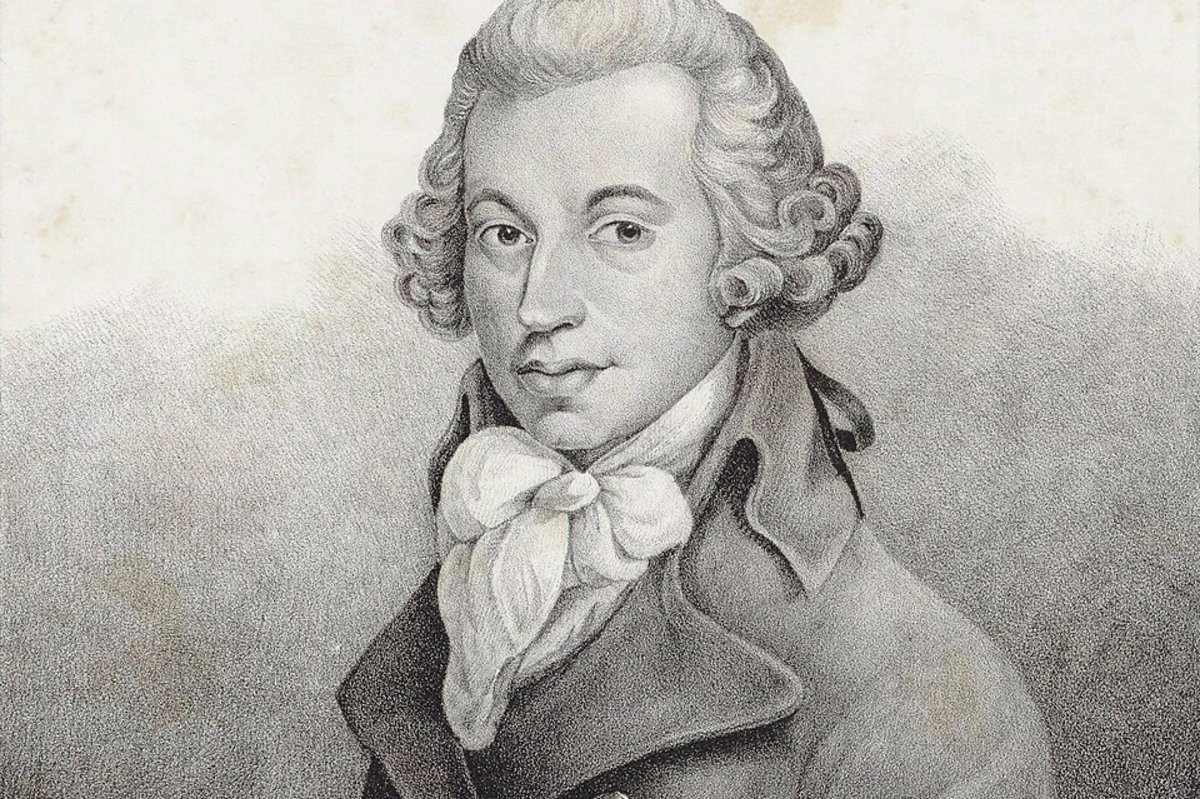
Darija: Just as a complete disclaimer — what has boiled down to the statement “this concerto is by Pleyel” means in long form that the handwriting on that paper, from start to finish, that first layer of information, is in a handwriting style that matches many other manuscripts that were recognized as Pleyel’s autograph by previous experts.
If you find one match and say, “Okay, the treble clefs are the same, the bass clefs are the same, the letters are the same, the rests are doing similar things, the final bar lines are the same” — if you match that to one other score, it could be a coincidence. But when you get multiple matches across different scores, that increases the likelihood that it’s by a particular person.
At this stage, for it not to be by Pleyel, we would have to explain all these other scores with matching handwriting style that are also signed with Pleyel’s name.
At the start of my doctoral studies, I attended a seminar on folk music history and research methods, because we often say Austrian classical music has a kind of folksiness to it. I wanted to do a deep dive on Austrian folksiness, and I thought I’d use the RISM incipit search function to try and find a folk tune lurking in Sperger’s concerto manuscripts. You can go to RISM and click Advanced Search, and a little keyboard comes up—you can enter different melodies, and it will give you results. And so I was just searching for anything that sounded like a singable melody.
And then there was this rondo theme from the fifth concerto that started turning up with lots and lots of results for chamber music by Pleyel. I was so disappointed that none of this was a folk tune. I had to go out for a walk to clear my head — I didn’t even realize what I was looking at in that moment. I was just like, “Oh man, no folk tune.”
Then, as I was outside taking this walk, the penny dropped. Oh wait — maybe. If all these pieces with basically the exact same eight-bar melody are turning up under Pleyel’s name, maybe I could look at Pleyel’s manuscripts. And that was it. Fortunately, many of these manuscripts have been digitized, and that’s when I first started to see a match in the handwriting.
Then I thought: oh man, I’m going to have to talk to people about this. I’m going to have to put together a convincing case, present it, and see if other musicologists find it convincing too. That’s why I decided to include really a lot of graphic examples and to really table up the results so that people could see what I was seeing and decide for themselves whether they think it’s the same hand or not. Because obviously I’m not trained as a forensic handwriting analyst.
Jason: At a certain point, with an abundance of circumstantial evidence, it’s almost like a trial. To what crazy extent would someone have to go for it not to be the case?
Darija: And this is the really lovely thing about handwriting analysis in music scores. It’s a completely different type of inquiry from something like forging signatures. In forensic handwriting analysis, sometimes if you get a signature that’s an exact match to another one, it can indicate a forgery—because the exact same means it’s more likely to have been traced very carefully. Whereas when people are doing their own handwriting, there’s a natural variation that comes up.
They’re usually going for the same kind of shape of character, forming the letter in the same way — but the letters aren’t exactly the same because people aren’t machines. So in the course of a piece of music or a score, you might get literally hundreds of examples of a treble clef. It’s not one or two — it’s many, many, many. And with a collection as extensive as the Sperger estate, you can see Sperger’s handwriting staying very stable across many decades.
Even in a sketch versus a clean, full-score copy, you see the same clusters of characteristics—just written more rushed versus with a calligraphy level of care.
Jason: If you think about your own handwriting — even your signature is never a carbon copy. There are commonalities. And the same must be true when you’re drawing a treble clef, a quarter note, anything in music notation.
Darija: Oh, it’s super cool. And it’s also super cool to trace the small changes Sperger made to his handwriting over time. One big thing is Sperger revisiting the form of the bass clef he likes to use. He started with an oval bass clef with a single line, and it eventually became something with more of a hook at the front, then two lines after the main curve with the two dots.
And you can actually see him starting a score with really good intentions — all the instruments listed, all these nice clefs — and you can see the newer, slightly more ornate bass clef happening at the start. But then, particularly in the course of the solo contrabass line, which switches a lot between treble clef and bass clef, a lot of those secondary bass clefs that come up in the course of the music will have just slipped back into the previous oval form.
Jason: I think we can all relate to that. We start out with the best of intentions and then…
Darija: It’s like the start of the school year. You have your fresh notebook, and you think, “This will be the year.” That first page is so nice.
How the Concerto Got Misattributed
Jason: How do you think this one concerto got misattributed? I mean, Sperger wrote so many pieces for bass — it’s like, another piece for solo bass, sure, it’s by him. But until you came along a couple hundred years later and took the time to really dig in…
Darija: What I feel is most likely is that this concerto was composed for Sperger. I do think that some of the other concertos transmitted through that collection in Schwerin were maybe also composed for Sperger, for various reasons. But in this particular case, we have Pleyel’s autograph score. That score came together with Sperger from Pressburg — today’s Bratislava. And on that score we find annotations in Sperger’s hand.
A solo bass part has also turned up, and it’s in the hand of the copyist who appears most frequently in Sperger’s early concertos, which he composed while he was in Pressburg. This hand stops appearing in later concertos — that’s a really strong indication to me that that copyist is associated with that particular early time in Sperger’s life. And the big sections in the first movement that Sperger crossed out aren’t in that copyist’s part at all. So this is a very early edit — they just don’t appear at all.
The other really interesting thing is that the first movement of Sperger’s 14th Concerto takes really quite a lot of material from Pleyel’s concerto. Sperger didn’t write a completely new score for that first movement—what he used Pleyel’s score, then left a note on the side saying, “Now go to page one of the other score,” where he inserted his own material.
Jason: Wow.
Darija: Yes. And then there’s stylistic similarity between this concerto and Sperger’s Sixth Concerto. I really think he composed it for Sperger and that Sperger was inspired by it, because you see him doing new things in the Sixth Concerto—he pushes the scope of that first movement in a way he just hadn’t before.
And there’s a small detail that I think is really important: how Sperger uses mixed spellings of “staccato” and “stockato.” Pleyel only used “stockato” in this concerto — it seems to have been his preferred spelling. Sperger doesn’t seem to use this term much, and when he does, he spells it with an A — “staccato.” But in the first movement of this Sixth Concerto, you see a long column in the score where all the wind and string parts are marked with either “staccato” or “stockato”—just one under the other, with a mix of spellings, as if he couldn’t decide.
The impression I get is that he saw this spelling, “stockato,” a lot while first editing Pleyel’s score and then reading from the copyist’s part, and then kind of internalized it while doing his next concerto. It just kind of came up for no particularly good reason. And as far as I know, he didn’t use it since.
Jason: If you contextualize it as a human experience — of course you would be inspired by a cool new piece written for you, especially if you’re a composer yourself. It’s only natural that you’d take some of those ideas and explore them in subsequent pieces.
Darija: Oh, absolutely. And speaking again to the human element — in the Sixth Concerto, there’s this detail about the mixed spellings that just strikes me as such a vivid little trace of Pleyel’s influence showing up in Sperger’s own writing.
Research and Performance: Two Disciplines, One Musician
Jason: I’ve always had this divide in my head — the people who become scholars and musicologists, and the people who are players. But I know that’s not the case. You sound fabulous — you sent me all these great links of you playing. How has research becoming such a central part of your life informed your musicianship? Do you feel you’re a different player because of all this work?
Darija: Oh, I’m really glad you asked this question. It’s an interesting one, and as I begin to answer it, I worry I might be a little too honest. It is two different disciplines — I really did do two different courses of study, and there is this tension between people who do things and people who theorize about doing things. Did you ever watch The Sword in the Stone?
Jason: Oh sure, yeah.
Darija: So this interaction between the owl Archimedes and the wizard Merlin — this is a perfect microcosm of practice versus theory. Merlin has turned Arthur into a little bird; now he has to learn to fly, and Merlin starts explaining: “Now, these large feathers here are called the primary feathers.” Archimedes gets offended and says, “Since when do you know all about flying?” And Merlin says, “Well, I’ve made an extensive study of birds and flight.” And Archimedes says, “Yes, blah blah blah, I happen to be a bird.”
For me, this is a perfect representation of sometimes what is going on at the divide of musicology and performance. Typically, if I’m on a gig, I try not to bring all of my contemplations and things to it. Because sometimes it’s okay, but sometimes it’s just no fun for anyone — least of all me.
And to be perfectly honest, it’s really nice to put all of that aside sometimes, because at the end of the day, we can’t really know what happened. It’s not actually even helpful to me as a researcher to go into a performance situation with this idea that I’ve read however much about this particular symphony or style, and therefore we have to do it in a particular way.
For my own projects — things I play or organize — I like to bring as much of this knowledge as possible, but there’s a time and place for it. If I can recommend one really good, not-too-long book: Peter Walls, based in Wellington, New Zealand, wrote History, Imagination, and the Performance of Music.

He’s a wonderful musicologist who also plays baroque violin, and he argues that studying performance practice should be its own thing—you don’t have to apply it, but it’s still worth doing even if it doesn’t have practical application now. I have felt the divide before, especially when I started studying musicology. There was an assumption on both sides of the fence that I had jumped the fence.
Jason: I just wrote that book down. I’ll put it in the show notes. I remember when I went to music school, the performance half of the building was literally on the opposite side of campus from the academic side. I always thought that was such an interesting metaphor.
Darija: Which is so wild.
When I think of how music was taught to Mozart and Haydn and Sperger, you learned harmony at a keyboard. It was such an integrated kind of practice — you wouldn’t learn music theory separate from an instrument; you learned it at an instrument because it was tied to being able to realize harmony from a standard bass line, or to improvise.
As a counterpart, there was solfeggio—literally improvising melodies between two particular notes. And that’s a field of study that’s been really interesting in the last few years: how solfeggio was taught, because that’s the other side of partimento study, which is realizing harmonic progressions and different schemas that people used as building blocks for composition. I don’t want to say, “we need to go back to the good old days of the 18th century,” but I do think they taught music in a very practical way that still applies really well today. Alma Deutscher — have you heard of her?
Jason: Yes.
Darija: She was taught using this kind of partimento method, and that’s part of why she’s able to just sit down and improvise a minuet or a symphony or whatever. The fundamentals of the style and the harmony are in the fingers. It’s a doing thing.
Closing Thoughts
Jason: I’m glad that Korneel recommended that the two of us connect. It’s super exciting that Rob Nairn is doing this modern premiere. Is there anything else you want to get out for the podcast?
Darija: Definitely point people to Rob’s performance. You know, in Vienna, souvenir stores sell these T-shirts with kangaroos on them saying there are no kangaroos in Austria. I always think of this when I think of Pleyel being played in Australia — it’s so nice that his concerto will finally be heard in his home country.
The other thing — maybe to plug for my doctoral supervisor, Dr. Clive Brown: the second edition of his Classical and Romantic Performing Practice book is out. It’s a lot longer than the first edition that came out about 20 to 30 years ago, and it’s available through Oxford University Press. It’s a fascinating and really readable book.

Jason: I will link up to that as well. And I always love coming out of these interviews with new book recommendations — both for the listeners and for me. Thank you so much, Darija.
We discuss topics like this every week in our email newsletter. We also offer free monthly sheet music giveaways, community news, and all sorts of cool opportunities for bass players. If you’re not on the list, consider subscribing!