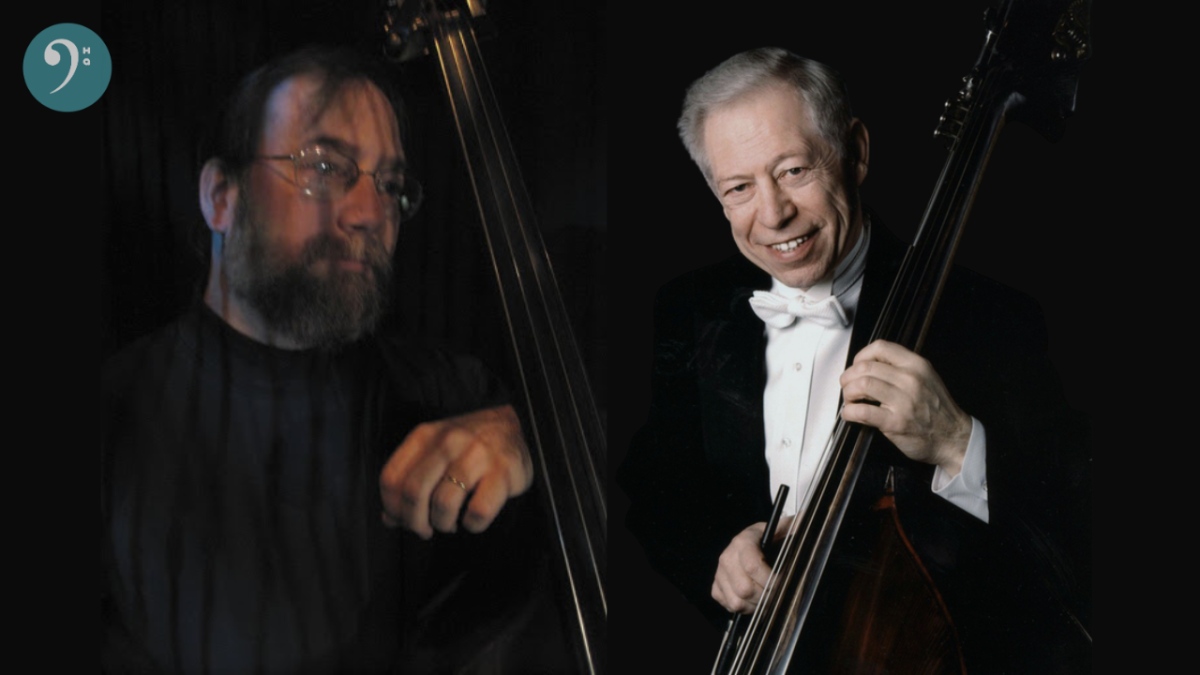
Today, we’re chatting with Caleb Quillen, the principal double bass of the Boston Symphony Orchestra. We dig into auditions, sound, leadership, and much more! This conversation has been edited for clarity.
Recognized for his artistry and versatility, double bassist Caleb Quillen joins the Boston Symphony Orchestra as its Principal Double Bass in September 2025. Quillen maintains a dynamic career in both orchestral and chamber music. A member of the Dallas Symphony Orchestra beginning in the 2023–24 season after seven seasons with the Kansas City Symphony, he has also performed with the Chicago Symphony, Detroit Symphony, Houston Symphony, and New York Philharmonic orchestras. Quillen studied at Rice University with Paul Ellison and Tim Pitts and at the New England Conservatory with BSO double bassist Lawrence Wolfe and with Donald Palma. A Tanglewood Music Center Fellow in 2015 and 2016, he was awarded the Maurice Schwarz Prize and performed with musicians of the Ozawa Academy Switzerland. In 2016, he was also a fellow in the New York Philharmonic Global Academy.
Our First Meeting and the 2008 Midwest Clinic
Jason: I wanted to rewind a little. I looked up when we last did a podcast — it was almost exactly 10 years ago, in 2016.
Caleb: 10 years ago, yeah.
Jason: That wasn’t the first time we met, though. The first time was before that, when you were still in high school. It was in Chicago — your orchestra came out. Was that 2008?
Caleb: Yeah, something like that. The high school was Stephen F. Austin High School. Carolyn Vandiver was the music director. We went to the Midwest Clinic. That orchestra had been invited there a few times.
Caleb: Texas, as you know, the funding for those schools is pretty great compared to a lot of the country. I was lucky to go to school there. It wasn’t like we were specifically seeking that out when my parents moved there, but it just so happened that we were in a great place for it. I remember performing something close to ‘The Elephant’ — a rendition of it, I think. It was so long ago. I remember you coming up to the stage, and maybe we said hi afterward.
Jason: I said, ‘Good job.’
Caleb: Was I 16 at the time?
Jason: Something like that. And seated to my right in the audience was Dennis Whittaker. Did you study with Dennis?
Caleb: I studied with Dennis in high school. He’s a big part of my life. I didn’t even remember that Dennis was there.
Jason: I think it was the first time I had met Dennis. He was right next to me, and we were chatting. Dennis and I have a similar background — we both studied with Jeff Bradetich. I just remember it being such a fun experience, hearing you play.
Caleb: Yeah. It was cold — my first real winter, since Sugar Land never gets that cold.
Dennis Whitaker and the Houston Bass Scene
Caleb: Dennis is the best. I could thank him for most of my success because of the foundation of technique he set. He’s a true pedagogue with so much experience teaching younger students. He always had this really organized approach — I remember him using colored pencils to mark parts. He always had a plan for each lesson. I was really lucky to study with him, and we still talk. He recently asked me to do a recital for the next ISB. If anybody’s in Houston and wants a knowledgeable, lovely person around them, Dennis is that person.
Caleb: I think I met Dennis in 2006, so I was maybe 14 or 15. Then I started taking sporadic lessons with Paul in my senior year, maybe every two or three months. Being in Houston was such a great thing for me at the time. I was 30 minutes away in Sugar Land, but it’s not that far considering all the teachers that were there.
Jason: There’s a reason why so many professional double bassists have Houston on their path — whether they’re from there like you, or studied there along the way.
Caleb: You have Paul Ellison, you have Tim Pitts, you have Dennis — who studied with Paul when he got there — and then when Dennis won the job at the opera, and all the bassists in the Houston Symphony. Now it’s even better with all those players down there. Hal Robinson used to be Assistant there, and Paul was principal, then Tim was principal — that was the golden Eschenbach era. Years ago, people wouldn’t have thought of Houston as a hub for bass players, but now it’s this legendary city for it. Super lucky to have grown up there.
Finding New England Conservatory: Ed Barker, Larry Wolf, and the Boston Sound
Jason: How did New England Conservatory get on your radar? That’s where you did undergrad, right? And now here you are back there — it’s a small world.
Caleb: It’s surreal. Every day, I think — if we’re living in a simulation, I somehow chose the best option. In 2008, I went to Boston University Tanglewood Institute, which at the time meant lessons with people in the BSO. I was there with a great group of bass players, playing in the orchestra — a really great program in the Berkshires next to Tanglewood. I had no idea as a high schooler what that was about. I met Ben Levy and Larry Wolfe, and when I got home, I found Larry’s recordings online and listened to them. After that, I knew NEC was going to be one of the schools I applied to.
Caleb: My interest in Boston was also sparked when Ed Barker came to do masterclasses at the University of Houston and Rice. I actually skipped a high school orchestra rehearsal to go to that masterclass.
From the moment I heard him play — he was on Dennis Whitaker’s Kennedy (instrument) at the time — I thought, ‘That’s what I want to sound like.’ That sparked my interest in what people call the Boston sound.
Jason: Anyone who hasn’t seen an Ed Barker masterclass is really missing out. I had the chance to see him do a few, and you could watch him working out solutions in real time on a borrowed bass. He’d hear someone play Bach and start experimenting with first-, second-, and third-scenario fingerings, staying up in thumb position. And that Larry Wolf sound on those recordings — I remember getting that one with the Glière or the Four Pieces.
Caleb: That’s exactly the one I was talking about.
Jason: My teacher, Michael Hovnanian — who was in the Chicago Symphony for a long time — studied with Larry briefly at NEC. I won’t tell the whole story here, but Michael got kicked out of NEC for writing phony letters to the dean.
Caleb: You know, there is this history of bass players being involved in some kind of youthful indiscretion and then ending up in major orchestras later, a little embarrassed about it. At UT, I got kicked out in my second year because another bass player had been drinking and asked me to keep his alcohol. I was trying to be a good guy, so I agreed. Then he told the administration that I had it, and we both got kicked out. I remember thinking, ‘If you had just kept your mouth shut, we would’ve been free and clear.’
Jason: Michael’s situation was similar. There was an electric bass player in the NEC dorms practicing constantly, so Michael wrote a letter, supposedly from the dean’s office, telling him to stop — and the guy did. Then someone broke a display case, and Michael wrote another fake letter summoning the person to the dean’s office on Monday morning. They traced it back to Michael. Fast-forward a few years, and he was a finalist for a section spot in Boston. He thought they were still holding the incident against him — probably not the real reason, but that’s what he believed.
Caleb: You’ve got to forgive those teenage years. If you look back at your teenage years or your 20s and don’t have some embarrassment, then you haven’t grown. We have to have some forgiveness for our younger selves!
Jason: I remember that Galliéra recording — one of the recordings Michael had me listen to for the sound. Then, a few years later, I discovered Ed’s Arpeggione Sonata recording.
Caleb: That is a classic record. Anyone who wants to hear some of the best playing — musically and technically — should listen to that sonata record; it’s incredible.
Jason: I became obsessed with that sound and with his vibrato. It was one of those recordings where I’d listen and then try to duplicate what I heard — almost like learning jazz licks off a record.
Caleb: Transcribing Ed’s oscillations, exactly. Now that I’ve been at the BSO for a bit, Larry has talked about what it was like in the ’70s and ’80s. Joseph Silverstein was the concertmaster — a legendary violinist — and Ed and Larry were both on the first stand, watching Silverstein’s bow arm for years. Ed was also playing in the Chamber Players. They both developed incredible bow arms and vibratos, and I think that foundation of beautiful string playing from Silverstein and, later, Malcolm really shaped everything.
For me, that really sums up what people call the Boston bass school: we want to sound as close to the other string players as possible — cellists, violists, violinists. The vocal, expressive sound is at the forefront of what we do. That’s the tradition of artistry at the BSO.
The Boston Sound: The Hall, the Bow Arm, and String Choices
Jason: It’s remarkable that you had that sound in your training from NEC. And now you’re helping carry it forward. There aren’t many orchestras in the US — or globally — where you can really point to a distinct sound the way you can with Boston. Philadelphia might be another. Chicago is known for their brass. How would you describe the Boston sound, and did the hall itself shape it, or was it really Silverstein’s influence?
Caleb: It’s definitely the hall — a huge part of it. The way I have to play to gain clarity when I’m sitting in the orchestra is different from how I might approach an audition or a masterclass demonstration. The hall has its own demands.
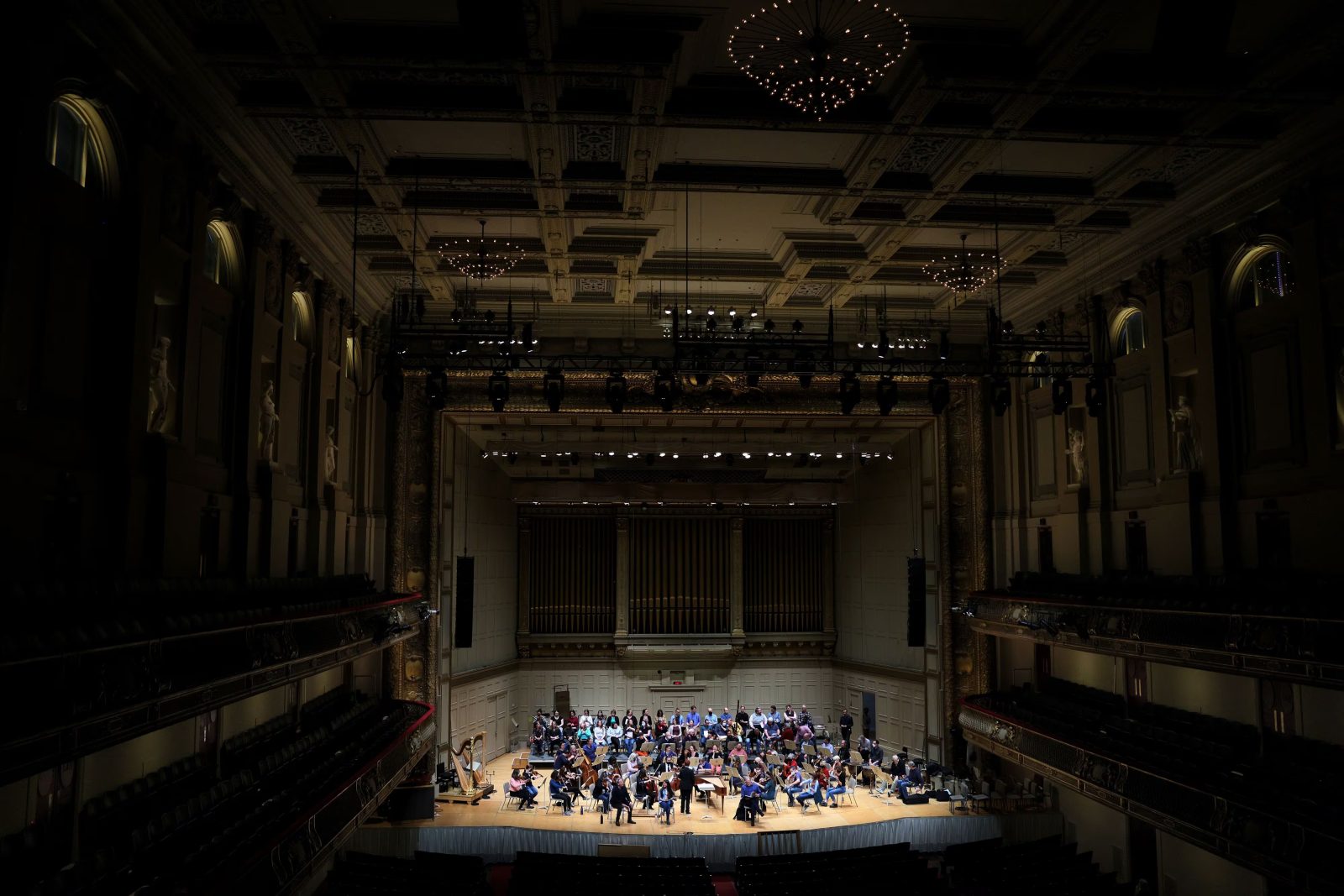
Caleb: What I’ve found recently — and I’m sure this will keep developing — is that the hall doesn’t want too much vertical, physical weight into the string. It’s so live that it really wants a draw that is carried. Ed talked about this a lot. The moment you put too much vertical weight in, the hall rejects it, especially in the bass.
Everyone talks about the BSO having a light, articulate sound with lots of off-the-string playing, and that’s true, but it’s also more than that. You need core to the sound as well.
Looking back at the old recordings, there’s just a lot of core there, which comes from how you feel you have to affect the string in that hall.
Caleb: Technically, it might be a slower bow. Most of the section — actually, all of the section right now — is playing on original Flexocores, partly because of the hall. They’re a bit higher tension, which feels better under the bow there. I’m personally playing on Deluxes because they’re more even across the strings.
If Pirastro is listening, something in between would be ideal — the bottom two strings of original Flexocores go a bit heavy on the C and A, while the G string is lighter and can get a little gritty on the open string. Deluxes feel more mid-voice to me, still with enough tension for the hall. But every day is different — sometimes I think they don’t have enough bass for the hall, and other times they feel just right.
Orchestra Life: Kansas City, Dallas, and Boston
Kansas City Symphony
Jason: You’ve now played in two wonderful orchestras in two wonderful halls, and now you’re in this hall, which we all know from recordings. The Kansas City Symphony’s Helzberg Hall is a beautiful, relatively new facility. And Dallas — Brian Perry got me into a rehearsal about 10 years ago. Both great halls. And then there’s you on that Kansas City podcast during the pandemic, talking about where you sat in the bass section.
Caleb: Yeah. I think I’ve blocked some of those years out.
Jason: It seemed like a bass section you could stay in for your whole career. But you’ve kept growing. How has the principal role compared to those wonderful sections you were in before?
Caleb: I had great examples to learn from. Jeff Kahle was principal in Kansas City, and that was a brand-new section of hotshots — Brandon Mason, who’s now in the Cleveland Orchestra, Nash Tomey, Richard Ryan, Keith Wymer, Evan Halloran. With Jeff, I never felt like I had to play a certain way as a section player. He led by example and carried himself in a way that let everyone kind of do their own thing while still sounding cohesive. We developed a sound shaped by that hall — it’s very live, so it demanded clarity and articulation.
Jeff (Kahle) taught me that a big part of the job is developing a culture, not being a dictator. Carl Anderson in the BSO gave me that framing: developing a personal culture helps people feel like they can play together.
Dallas Symphony
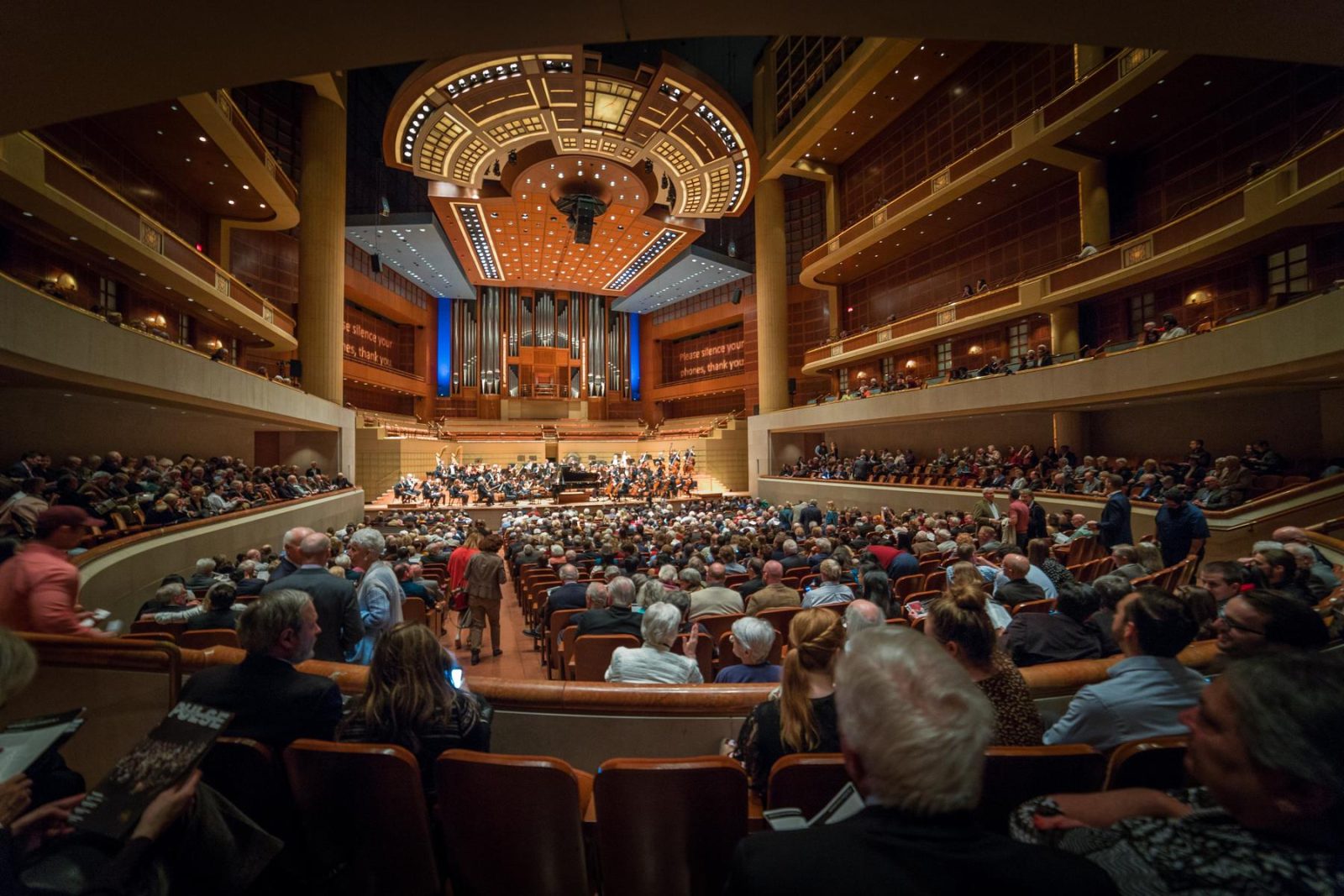
Caleb: Dallas was different. On stage, it feels a lot drier, so I felt like I had to play things a bit longer, with more spread to the sound — closer to the fingerboard. Fabio (Luisi) consistently wanted less bass from me, which I think was related to how it sounded on stage. The rest of the string section played with a lot of core to the sound. It’s hard to explain exactly — it was a core sound without requiring a lot of bridge pressure or extra tension. Kansas City was a bit more polished-sounding as an orchestra, partly because of the hall. Dallas wanted more of that direct core.
Taking on the Principal Role at the BSO
Caleb: Going into a principal role, I drew on the great examples I’d had. I also talked quite a bit with Ed Barker before starting. He always emphasized leading by example — not turning around and barking orders. Nobody wants that. Every now and then, you turn around and say something, or change a bowing, or explain something about where you’re playing with or without the stick.
But on a day-to-day basis, if you have great colleagues as I do in Boston, you don’t need to tell anyone how to play. You just lead by example.
If you try to boss people around, things get worse. The goal is to build a culture where everybody comes to work enjoying each other — I believe people genuinely play better that way.
Jason: I’ve played with one orchestra — which I won’t name — where the principal would pull out a tuner set to 440 and the second chair would pull out a tuner set to 442. For decades. It was emblematic of exactly what you’re describing. Jeff Kahle, for those who don’t know him, is an outstanding principal. I was playing with him around the time he was auditioning and kept coming in as runner-up. Then Scott Pingel got the San Francisco job, and Jeff eventually landed at Iris Orchestra.
Caleb: Jeff started in the Kansas City section first, then won the principal job about a year later. He’s in the Tetons now — living his best life as a marathoner and a dad. I’ve learned as much from teachers and older colleagues about being a good person in the section as I have about pure musicianship. They go hand in hand. I hear people’s personalities in their playing — where their head is at.
Finding Your Voice: Development, Ego, and Musical Identity
Caleb: Being a young musician today is difficult — you’re inundated and overstimulated by everyone’s online presence. That can be detrimental to developing your own sound and sense of how you want to operate in this world. For a long time, when I was younger, I was trying to prove myself and wanted the validation of sounding good and having people tell me I sounded good. At some point, you have to decide: how do I want to sound? You have to conserve what Ed, David Moore, Paul Ellison, Hal Robinson — all of them — have to offer. But eventually you have to figure out what you want from your instrument, what you want to express.
Caleb: Things get lighter when you start listening to your own instincts about how you want to sound. I think a lot of people’s success starts when they get to that place. I still have an ego — I still don’t like when I’m not sounding good, and I still like when I do. But it becomes less about that and more about: why do we do this?
The reason we do this is to express something about the human condition through sound. Once you keep trying to find and access that space more consistently, it makes you feel lighter, more forgiving of yourself. And it leads to better playing, because you’re actually trying to make music rather than just executing something even.
Caleb: At some point, I found another place while performing where I was actually singing internally — hearing and listening in real time and developing a personal voice. When I was in that space, if something didn’t go well early in an audition, I could shift back to that mindset: ‘I’ve done the muscular work, the choreography — now I can play how I want.’ And then I started wondering: why am I not doing this in the practice room? How you practice is how you perform. The headspace I had in the practice room wasn’t the same as when I performed, and I think you have to keep asking yourself: where do I want my head to be when I perform, and how do I get there consistently?
Jason: Alex Hanna said something similar — ‘Never practice, always perform.’ And Nathan Cole talked once about wanting to succeed in what you’re doing pretty much all the time. Dan Carson put it as ‘saturate your playing with excellence.’ The idea is to simplify things to the point where you’re succeeding most of the time.
Caleb: That’s exactly the point of breaking things down. We all want that dopamine hit from improvement.
When you break things down, and even two notes start getting better, that snowballs. You’re not getting discouraged, you’re not developing bad habits physically, and you’re not leaving the practice room after three hours wondering what you actually did.
That happens when you weren’t present — you were going through the motions. It’s about the small wins. And those small wins and that openness to new things are also how you keep from getting jaded in this career. Once you get a job, that exciting ‘working toward something’ feeling diminishes, and you have to start developing your own goals, or you can flounder.
Jason: Ira Gold — an Ed Barker student — said getting the job is like walking through a door into a whole different world. All the surveys show orchestral players often have lower job satisfaction than you’d expect, even compared to professions like sanitation work. David Allen Moore asked me to bring this up: how do you win a job while holding down another job? I remember subbing in San Francisco — Sean O’Hara was also subbing — and after a Wednesday double, Sean went straight down to the basement with a sandwich to practice. The idea of picking up the bass again after a double was genuinely unappealing to me. How did you balance continuing to develop while holding down that job in Kansas City?
Caleb: In Kansas City, I always practiced before rehearsals because I wanted to be fresh, and I’ve always liked early morning practice sessions with coffee. I did occasionally practice after a double, but you have to be smart about how you play in rehearsal. If you go in and blast through everything, your body won’t want to do more, especially once you’re in your 30s.
Caleb: Beyond the physical side, it’s about staying open. No matter who it is — students, teachers, colleagues — somebody always has something to offer you.
Our job as musicians is to listen, and I think that extends to being open to everything people say. I’ve always been someone who doesn’t feel certain about any one approach. I’ve had colleagues from different schools say, ‘this is how we do it here,’ and ‘this is how we do it here’ — why not incorporate all of those?
Paul used to say that pedagogy is a science in the sense that you’re always trying to prove yourself wrong and make sure what you’re doing holds up. It probably never will be a pure science since what we do is also a spiritual thing, but that spirit of questioning keeps you developing.
Keeping Up With the Fundamentals
Caleb: Practically, keeping up fundamentals has kept me in shape: double stops, long tones, scales. Scales are hugely important, and I know people don’t want to hear that. You have to eat your vegetables. Soloists play their scales. As bass players in an orchestra where you often can’t hear yourself, you need that time in a room to hear yourself and stay healthy.
Jason: I remember walking past Robert Hanford’s dressing room at the Lyric Opera half an hour before a show — he had a big solo that night — and instead of hearing that solo, I heard Sevcik. Since this is a bass podcast, what does your scale time look like? Do you have a routine to keep the blade sharp — what David Moore calls musical hygiene?
Caleb: Honestly, it changes a lot, and sometimes it’s not routine. But when I pick up the bass in the morning, I’m just trying to see where it’s at that day, because it changes so much. I’ve never played a scale, arpeggio, or double stop with long tones without feeling better and hearing my sound improve afterward.
Caleb: I always start with something slow — just trying to get the bass to ring, trying to find my sound. I set the metronome to 60 and go from one note per click to eight notes per click. Sometimes I start a warm-up with something I’m working on or with a Bach movement. It’s never the same. And in the morning, when you’re going through your scales, be open to what you’re thinking about that day. If there’s something you keep returning to, your mind wants to figure it out — go in that direction. Just turn the phone off and give it your full attention.
Jason: That reminds me of the story about Pablo Casals — he would play the open C, then the D, and said he had to find the E every day. I also talked to Luis Celis from the Cincinnati Symphony, who equated practicing with lifting weights: the growth happens after you’re done lifting.
Caleb: Exactly. And sleep is a huge part of that — your brain processes and consolidates what you’ve been working on. I lift weights, too, and you have to take time away. I’ve found this especially with Bach.
Paul (Ellison) used to talk about it, and I never understood early on, but you have to step away and let yourself process. If you don’t, you go to perform and you’re just — Brandon Mason called this ‘thinky’ playing. You’re only thinking, and where you want to be in a performance is just doing it and singing.
Caleb: I completely understand taking days off, giving yourself breaks to decompress. Part of it is just physical tension — if you’re constantly under strain and never recover, you’ll play out of tune and lose range of motion in the strokes you need. And sometimes your podcast has been more valuable than a 30-minute practice session. I remember being a student at NEC, listening and picking up little earworms like ‘Oh, that’s an interesting idea about this technique.’ I remember you once talking about how sometimes the people who win the audition are the ones who go to concerts rather than practice as much.
Jason: Jeff Turner, who chaired the audition committee for the Pittsburgh Symphony for a long time, noticed that the winners very often had just played a recital or done something else meaningful. Back at Northwestern, the cello studio was intense and you’d see people parked in practice rooms until 11 PM on Friday nights. The ones I never heard from again after Northwestern were often those people. The ones who went to Chicago Symphony concerts or played on a friend’s recital — they were just a little more alive to the music.
Caleb: Live some life.
Jason: Exactly. They had a little more to say.
Caleb: I think the development doesn’t always happen in the practice room. When you do a recital, you’re in a different headspace — more expressive, less analytical. And when you bring that back to your excerpts, the audition stops feeling like grinding. I try to make this image: when you’ve been grinding your way through excerpts for weeks, sometimes you just play some Vivaldi or something you love and get out of that headspace, then come back and think, ‘Right, this is music.’ Maybe some players also just have an innate confidence. And perhaps unconsciously, when you take time away and play a recital or have dinner with friends, you’re telling yourself it’s going to be okay — that you’ll sound good even without constant practice. Whereas if practicing is all you do, you might be sending your body a message that if you stop, you won’t be okay.
Settling Into the Principal Chair at the BSO
Jason: What’s the experience of stepping into that principal role actually been like? Jobs like this open up every 50 years. Alex Hanna opened the union paper one day, saw the Chicago Symphony principal bass job listed, and thought, ‘Well, there it is.’ What has the day-to-day reality been compared to what you imagined?
Caleb: The months leading up to starting the job involved a lot of imposter syndrome — ‘Why is it me? Am I going to be able to do this? Will they find out I’m not the right match?’ I held Ed Barker as this kind of ultimate standard: how he carries himself, his constant searching, his work ethic, and his inspiration to everyone around him. A lot of it was just comparing myself to him.
At some point, people around me kept reminding me: I’m not Ed Barker, I’m not any of those others — I’m me. I’m going to do things differently, and I’m going to make mistakes.
Caleb: Once I got into the seat and started playing, I found I had enough experience. I know how to do this. There is more pressure in the chair than in a section seat, but once I got out of the mindset of worrying about optics — who am I to hold this job, am I impressive enough — it became clearer: I’m a musician, and my job is to make music. I’m from Sugar Land, Texas. I didn’t grow up in a musical family. But once I got through all of that, it’s just been: okay, I’m a musician. Times are also changing — even in the BSO, it’s not quite so ‘suit and tie’ in the old sense, even if it still is in some ways.
Caleb: My section has made it easier. My stand partner, Larry, has been a rock for me because it has been mentally draining. My process as a musician has always involved constantly feeling like I’m doing something wrong — before an audition, before any of these big moments, I’m freaking out.
But that’s my road. I’m neurotic, and I think if I weren’t that way, I wouldn’t be here. It’s a double-edged sword. To any young student out there having constant crises about your playing — that’s probably where you need to be. We live in a world that says ‘don’t be uncomfortable,’ but this is not a comfortable profession.
That discomfort and uncertainty about what it’s going to be like is just part of the process.
Caleb: It’s been busy, and it’s an amazing job. I’m extremely grateful for it and for everyone who’s been a part of it — because it wasn’t just me. Use the people around you.
Closing
Jason: Well, it’s been a real pleasure. The older you get, the smaller the world feels. Someone I met when you were 15 on a stage in Chicago — and here we are in San Francisco. Let’s not wait another 10 years.
Caleb: Absolutely. I’m always happy to talk with you. And thank you for having this podcast — it’s such a great resource for our bass world. I appreciate it.
We discuss topics like this every week in our email newsletter. We also offer free monthly sheet music giveaways, community news, and all sorts of cool opportunities for bass players. If you’re not on the list, consider subscribing!