Practicing is a major part of what I work on with my students because that’s where most of the actual work happens. If you’re frustrated by your lack of progress, you might not be practicing as effectively as you could.
There are many ways to practice, but I see a handful of things people do that get in their way. Below are 5 that I see most often.
1. You always sound great
If you sound great the entire time you’re practicing, it means you’re not pushing yourself. The purpose of practicing is to work on weaknesses.
I think people are (understandably) nervous about pushing themselves too far, not sounding great while doing that, and then ingraining bad habits. This makes sense, and I get it! However, there is a balance between practicing bad habits and the normal growing pains of progress.
If you’re self-evaluating and working to fix the mistakes, you’re generally in good shape.
2: You aren’t really self-evaluating
Oftentimes, when I hear a student play something they’re clearly unhappy with, they can’t specifically name what went wrong when I ask.
Self-evaluation is a core part of practicing. You should be able to name exactly what went wrong, not just “it wasn’t good.” If you can’t name the problem, you can’t fix it.
I encourage my students to get in the habit of describing the issue out loud after each repetition. This forces you to be in the solution, not on autopilot. If you try this, I think you’ll find that the resolution will come a lot easier (instead of, “just play it better, I guess?,” the fix becomes, “I’m running out of bow, so I need to move my bow slower at the beginning.”)
Bonus tip for this one: if you can’t figure out what went wrong, record yourself! Audio is great, but video is better so you can spot something physical that might be happening that’s getting in your way.
3: You’re not practicing slow enough
If something isn’t getting better, practice slower. I sometimes start my slow practice at 25% of my goal tempo because that’s what I need for that specific spot.
My rule of thumb is, if I can’t play something perfectly at my slowest practice tempo, then that tempo is too fast.
The slower you allow yourself to start, the quicker you’ll be able to make progress up to tempo.
There’s no practice tempo that’s too slow, in my humble opinion!
4: You’re spending too long on one thing
If you find yourself practicing one section for an hour or more, you’ve passed the point where you’re actually making progress.
It’s wonderful to be focused, and I also love the feeling of getting in the flow with practicing one passage.
But I think there’s a balance between being meticulous and overdoing it. Your brain needs time and space away from something to really digest it. Focusing on one thing for such a long time leads to diminishing returns – in other words, it’s a waste of time.
Also, I don’t know about you, but I have other things to do!
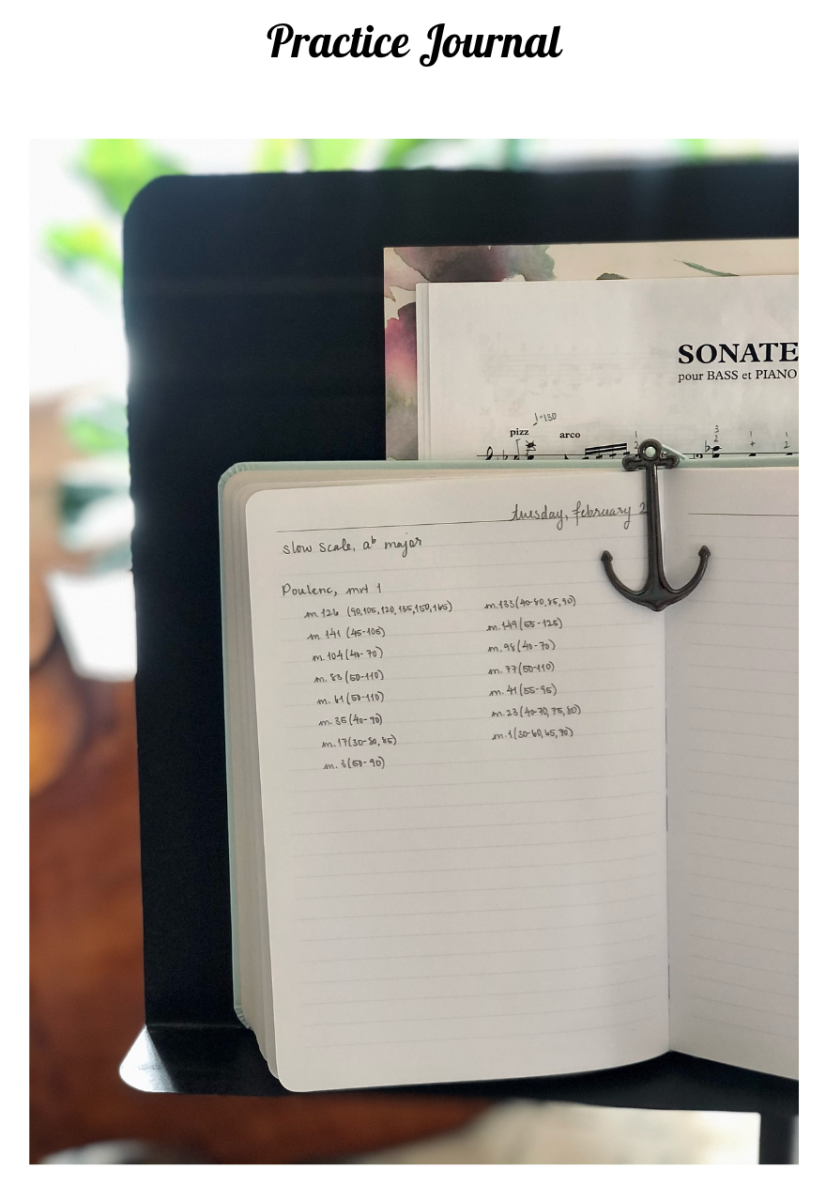
5: You’re not tracking your practicing
I am a HUGE fan of keeping a practice journal, and I keep it simple. I write in the section (either a rehearsal letter or measure number), the tempo I started, and the tempo I got to, and that’s about it. If I’m not doing metronome work, I’ll write in something very short like, “intonation” or “hand shape” to remind me what I focused on that day.
You don’t have to write a thesis on what you did each day (and in fact, I encourage you not to). But making a short note of what you did today will help you move forward tomorrow.
For more of Lauren’s insights, visit her Technique Tuesday series and sign up for the Double Bass HQ newsletter to have the series delivered to your inbox each week.
Connect with Lauren