

In the beginning, there is the “What”. With our early technical development we are concerned with the ‘“what”- “what” fingering, “what bowing”, “what” endpin height, “what” stroke, etc. As we advance, the “How” starts to infiltrate and take over. The “how” is lost in printed music, challenging to describe in text, and usually passed on in person by a teacher or mentor.
If you look at the technique books of François Rabbath, you may come across many familiar fingerings that are shared by other approaches. The point here again is not the “what”, but “how” those fingerings and techniques are executed that makes his method so brilliant and transformative.
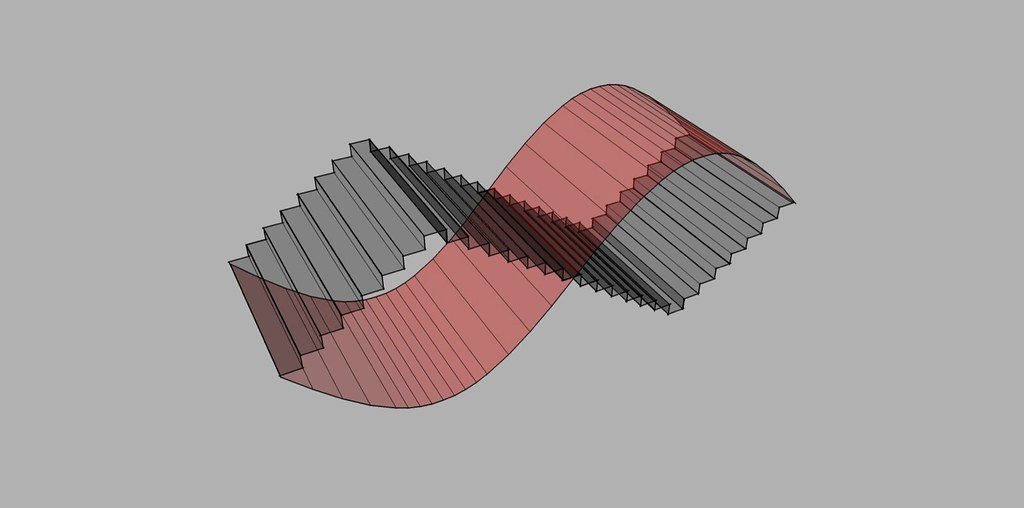
This contrast is present in even the most basic of practice techniques. The virtues of slow practice cannot be overstated, but it is important to understand that there is more than one way to play under tempo. Different strategies can yield great results, but the intent behind them is a crucial component. The defining characteristic is the difference between Tempo and Cadence. Tempo is the speed of the music, while Cadence is the speed of the movements.
Analog Slow Practice
This first type of practice might be more aptly named “slow MOTION practice.” With this type of practice, every motion is proportionally slower. Every finger drop, shift, string crossing, and bow change is performed with slow, deliberate movement that mirrors the proportional pacing that the passage will have when played at full tempo.
It is an exercise in being fully present during every part of every note. Notice the smooth curve of the analog sine wave. It is important at this phase that expression is a vital part of the performance. Frequently, we rely on speed to generate momentum. This is similar to claiming you have a fast car based on how fast it falls off a cliff. The passage should have its own internal musical momentum regardless of the performance tempo. Spend more time under tempo and strive to increase the detail and expression in the music rather than hurrying to step up the metronome speed.
One variable in analog slow practice concerns bow speed usage. Speed + Length = Sound / Time, so obviously, slowing down all of your movements will result in a different dynamic than when you play the same motions at tempo. It is important to play a portion of the passage (even one note) at full tempo to establish the parameters for your movement goals.
Digital Slow Practice

This type of slow practice has 2 variants. The first version involves playing individual movements at full tempo while interpolating silence between the events in order to slow the passage down. This can be visualized as the step-wise motion of the digital sine wave. The passage could be performed at half tempo, but every finger drop, shift, string crossing, and bow change is performed AT TEMPO while the music itself proceeds at whatever predetermined pace has been selected. The time between events gives the player more time to anticipate and visualize movements that have been experienced fully in Analog practice.
Alternating between Analog and Digital Slow Practice will yield the best results. A variation of Digital Slow Practice could be called Stop-Time Practice. This involves identifying a challenging spot in the music and then applying the following procedure:
- Play at tempo from a few notes before the spot in question
- STOP
- Fully conceive in REAL TIME the next move (narrate out loud if it helps)
- Execute the move and continue on for a few notes
- Evaluate. Adjust step 3 accordingly. Back to step 1
Take as much time as you like with steps 2 and 3. A way of blending Analog and Digital Slow Practice through Stop-Time can be especially effective. Play steps 1-5 while gradually shortening the time in step 3. As the gap in step 3 gets closer to being at an under-tempo flow, slow down steps 1 and 4 to ABSORB step 3, and play the whole passage in one tempo, with Analog pacing, integrating all of the movements.
Check out more Fractal Friday writings here.
About the Author
David Allen Moore, 4th Chair Bass of the Los Angeles Philharmonic since 2000, was previously a member of the Houston Symphony. He is an internationally sought-after Guest Principal and has performed with the Helsinki and Israel Philharmonic.
Moore is the author of Fractal Fingering, a required text at notable universities. He joined the USC Thornton School of Music’s full-time faculty in 2010 while maintaining his position in the Los Angeles Philharmonic. He also teaches at Domaine Forget in Canada and DiscoverDoubleBass.com. His students hold positions in orchestras globally.


