

If you know anything about Arco bass players, you know we have a particular obsession with rosin. Today I’m unboxing and reviewing Winter, a rosin made by Isaac Trapkus, bassist in the New York Philharmonic. I’d had a couple of swipes from a friend a while back — felt like some kind of illicit deal — and when my Pops (rosin) started getting dry, I figured it was the perfect excuse to finally order some.
The Packaging
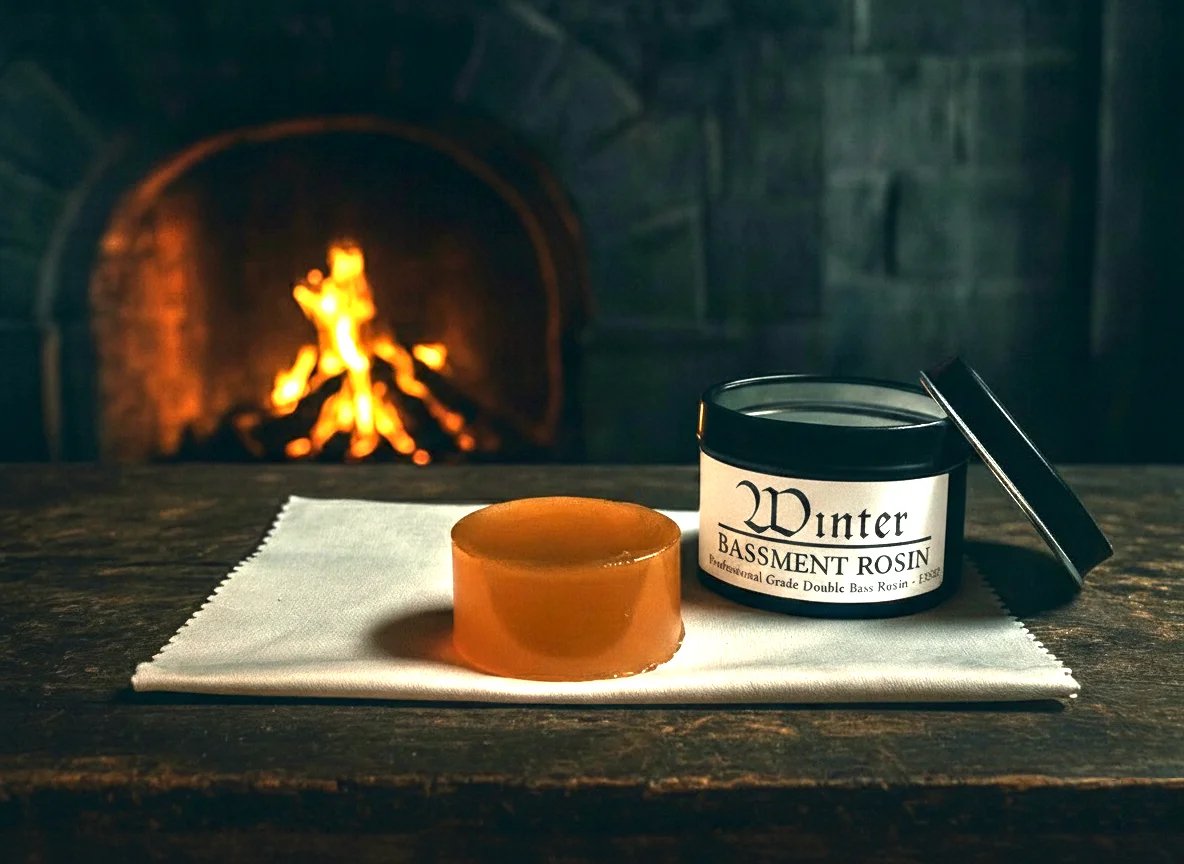
Winter comes in a sleek metal container with the rosin nestled inside a small microfiber cloth — something I haven’t really seen with bass rosin before. The rosin itself has a cloudy, hazy IPA color, noticeably different from Pops, which is much more translucent. I can actually see through a cake of Pops; with Winter, no chance. The metal tin should also help keep the rosin from oxidizing over time, which is a nice touch.
First Impressions on the Bow
That first swipe of new rosin is a feeling like no other. Even before playing a note, you can feel the tacky, sticky quality dragging across the bow hair — and that tells you something. There’s no Play-Doh mushiness here, no risk of glazing up your bow, but it’s definitely grippy in a purposeful way.
How It Plays
Winter has a great front edge. It grabs the string, which is exactly what orchestral bass players need. But what’s particularly impressive is what comes after the initial bite — the draw is very nice. It’s smooth and sustained without the buzzy, bees-in-a-jar quality you can sometimes get with Pops.
It shines especially with articulated passages. I got that satisfying peppery, machine-gun quality in quick strokes, but it also sustains beautifully when you draw the bow slowly. It feels like the rosin is pulling out the character of the instrument rather than coloring the sound, which is harder to achieve than it sounds.
The Great Rosin Trade-Off
Here’s the eternal problem with bass rosin: low, thick strings require serious friction and grab to move, but that same friction can produce gritty, noisy tone. You want a strong front attack, a clean sustain through the stroke, heat tolerance as tempos rise, and minimal powdering — all at once. Every rosin is a compromise somewhere along that spectrum.
Winter leans toward clarity and drawing. If you need that authoritative, coin-on-a-drum-head pop that something like Pops provides, you might find Winter a bit more refined and less blunt. But if you want something that responds well to gestural, expressive playing and doesn’t muddy your tone, it delivers.
String Buildup
I didn’t wipe down my bass before filming, and even so, the strings looked remarkably clean after playing. Very little buildup. For players who hate constantly cleaning rosin dust off their instrument, that’s worth noting.
The Story Behind Winter Bass Rosin
I also got to hear from Isaac about the rosin-making process, and it’s far more involved than you might expect. Like many people, he initially assumed it would be simple — buy some gum rosin (available by the pound from suppliers), soften it up somehow, and be done. But pure gum rosin is essentially student-grade violin rosin in a block. Something has to be done to it.
He worked through the obvious categories: water-based additives, solvents like rubbing alcohol, and oils. Rubbing alcohol, for instance, made the rosin wonderfully soft for about seven minutes before it dissolved into soup. Fifty-percent beeswax? A horrible idea! He estimates he went through hundreds of iterations over years of experimentation.
What little historical research existed pointed to old Italian luthier guidebooks describing how bass players would visit their luthier — who had access to varnish ingredients like turpentine and Venetian turpentine (larch resin, which has a unique gumminess) — and mix up custom rosin blends on the spot. That tradition of custom blending is essentially what Isaac revived, just with a lot more trial and error.
He also explored the industrial world of rosin, which turns out to be vast and strange. Rosin shows up in fracking fluid, adhesives, and coatings, and, counterintuitively, at extreme pressure and temperature, it actually acts as a lubricant rather than a sticky agent. Interesting, but not directly helpful for making bass rosin. The research paths branched endlessly.
In the end, it came down to identifying five to ten promising ingredients from the literature, figuring out how they interact, and spending years refining the combinations — guided by feedback from fellow bass players who were honest enough to say “no, not yet” over and over again until something finally worked.
Bottom Line
Winter is excellent rosin. It’s particularly well-suited for players who prioritize clarity, expressiveness, and a clean, sustained tone. I’m bringing it to my San Francisco Symphony sub gig this week, and I’ve been noticing it on bass stands at orchestras everywhere. Highly recommended — and knowing the years of genuine craft that went into making it makes it that much more satisfying to use.
Purchase Winter Bass Rosin (this is not an affiliate or sponsored link.)
We discuss topics like this every week in our email newsletter. We also offer free monthly sheet music giveaways, community news, and all sorts of cool opportunities for bass players. If you’re not on the list, consider subscribing!


