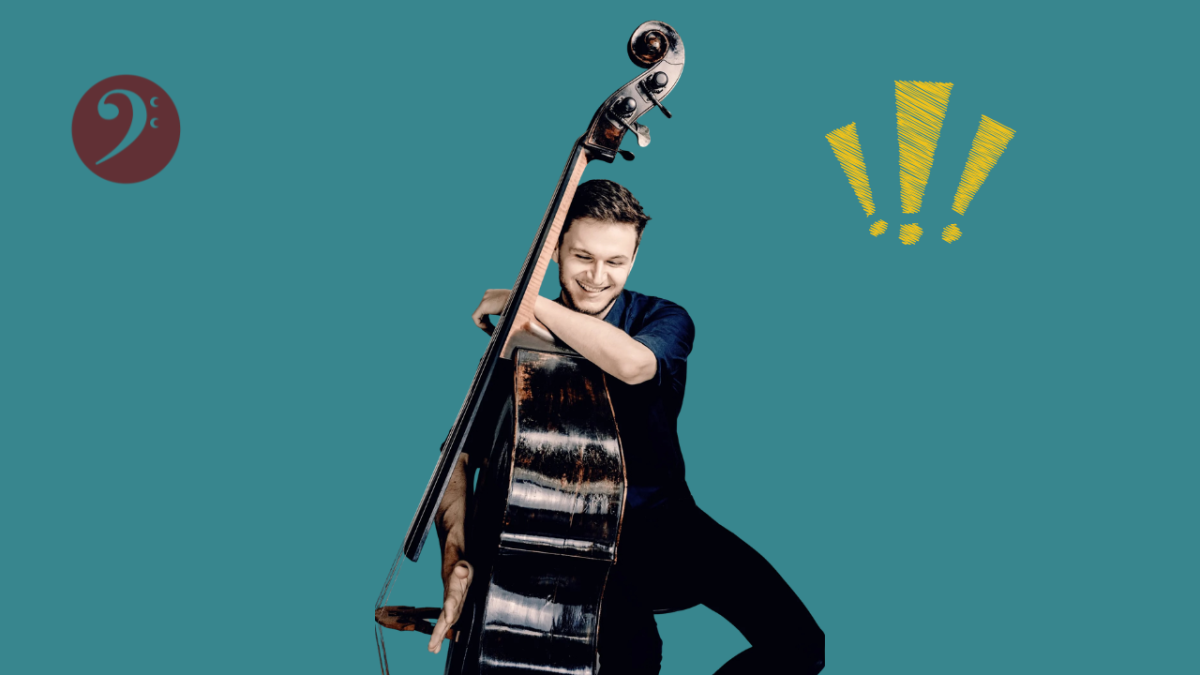
Winston “Jack” Budrow, former ISB board member, passed away on September 4th, 2024, at 79 after a brief hospice stay.
Jack retired from Michigan State University’s College of Music as professor of double bass and co-chair of the string area. His career spanned performance and teaching, including positions with the Houston Symphony and as principal bass in the North Carolina Symphony. His students have secured roles in prestigious orchestras worldwide, from Atlanta to Oslo. Jack also taught at the Interlochen Center for the Arts during summers.
Jack’s exceptional teaching earned him Michigan’s 2014 String Teacher of the Year award from the American String Teachers Association and the ISB’s 2017 Special Recognition Award for Teaching. He’ll be remembered for his joyful presence and rollicking humor.

This is a transcript of a conversation with John Grillo, Jason Heath, and Jack from 2008 for Contrabass Conversations and has been edited for clarity.
Jason: Why don’t you tell folks about your first musical instrument?
Jack: Well, my first musical instrument was actually trumpet, which I started in middle school.
My father was a professional trumpet player. As a matter of fact, he was in the Tommy Dorsey Orchestra. I did get started on trumpet, and I just didn’t have the embouchure for it, or the interest. So I gave it up, and later on in high school, I heard an educational concert with the New Haven Symphony.
I saw that bass sitting back, all those basses sitting back there, and I heard the sound of the bass, and I loved it. My grandmother went out and bought a bass for me and got started. I started taking lessons with Sid Ryan, who was a long-time double bass player in the New Haven Symphony, and Sid’s sonBill Rhein was in the New York Philharmonic at the time.
I took lessons with Sid for a while, and then he said, “I think you really need to go study with my son.”
So, I started driving to New York to study with Bill Rhein. Bill was actually one of my biggest, if not the biggest musical influence. He was a great player, just a great player.
He was in the Philharmonic, I believe, when he was 21 while he was still a student at Juilliard. Later, he went to the Boston Symphony and eventually became assistant principal of the Boston Symphony. And taught at New England Conservatory. I’ve always been very appreciative of the Ryan family. They were wonderful people.
Listen to the podcast in your app of choice
Jason: It’s great to have an influence like that so early on. It sounds like music was really in the family with your dad in the Dorsey band. Did you always know that you wanted to be a musician, or what point did you know that?
How Jack chose double bass
Jack: I really didn’t know until I was in high school, maybe junior year or senior year. It wasn’t immediate. I just loved the sound of the bass, and I didn’t have any ideas on what I would do. If I was going to major in music in college or whatever, I just didn’t have any idea at that point. I just knew I really loved the sound of the instrument.
One intriguing thing about the double bass: when you hear it in an orchestra, you don’t just hear bass, you feel bass. It’s a presence, and it’s really quite unmistakable.
I think it’s the only instrument in the orchestra with that kind of ambiance. It’s true that when you hear an orchestra, there’s a cello-bass sound in combination, especially with an excellent orchestra. It’s kind of one unified sound. But there’s no mistaking the ambiance of the bass. Actually, you feel the sound more than you hear the sound, and that’s more true on CDs than it is live.
I think everybody really loves that bass sound. When I’m driving around town and hear a lot of rock or country or whatever that these young kids listen to when they’re driving around in these Honda Civics, and the woofers are just about as big as the backseat. I think that they really enjoy hearing that bass sound. There’s no such thing as a high end speaker of that size in the car where people want to hear that low end. I think it’s kind of. instinctive to hear that bass sound.
It’s kind of a very solidifying thing, and very grounding to hear it. So I’m not surprised, looking back, that that’s what intrigued me immediately.
Double Bass in Ensembles
I love ensembles. I love the orchestra. I love being part of something. The whole is better than the sum of the parts, in a way, and I love the repertoire, mostly.
I think if I were a violinist or a cellist, I’d probably be more interested in playing chamber music. But, for we bassists to hobnob with the great composers, to hobnob with Strauss and Tchaikovsky and Brahms, we have to go to the orchestra. I think that’s one of the differences. I think that’s why we select a symphony orchestra to play in.
Jason: It’s too bad that we don’t have more chamber music out there by those composers.
Jack: The great composers wrote for violin, cello, voice, and piano.
Those four instruments are who most of the great composers wrote for. Probably because back in those days, the better performers were on those instruments. That was what was accepted by the public. They had some economic issues there, too. They had to write for instruments where the public was buying it.
Back then, Instruments like the bass had those big, thick gut strings. The whole instrument was more primitive. The bows were more primitive. So just by nature of what was available to play on, I think that’s part of the reason why these composers went to instruments like violin, which also played on gut strings, but it was a little more user-friendly than double bass was back then.
I’m not saying the bass didn’t sound great back in those days, but it’s better today. I think that the instrument sounds better today than ever. Because of the sophistication of different kinds of strings, and the bows are more… some great French bows were made, but those early German bows were fairly primitive.
Look at the Dragonetti bow, there was very little camber in the bow. My hat’s off to anybody who could really play fast and furious with that equipment.
A lot of people think it’s because composers like the sound of the violin. I’m not so sure. I think that the choices that composers make, or made back in those days, had to do with the ability of the instruments. Certainly, today, there’s a lot of music, and good music, being written for the double bass. I don’t see the composers today holding back at all. I think it has to do with the players, yes, first of all, but also the level of the equipment and the level of the sophistication of strings and bows, etc. I think that’s played a big role.
Jack’s College Training
Jason: Where did you go to university and what were your early years like in the profession?
Jack: I went to Bowling Green University in Ohio, where I studied with Tom Monaghan, who was in the Detroit Symphony and later was principal in Toronto.
I also studied with Peter Howard, who was a long-time principal cellist with the St. Paul Chamber Orchestra. Then, I continued to study with Bill Rhein, partially during the year and mostly in the summer. That was the undergraduate. Then, I went to Carnegie Mellon and studied with Tony Bianco for one year.
Then, I went to Boston, where I continued full-time studies with Bill Rhein at the New England Conservatory. So those were my three schools. I didn’t finish my master’s because I got a job, but otherwise, I would have.
I really enjoyed all three schools. Being a student is wonderful because you’re pretty much carefree. You can just concentrate on one thing and that’s music. It’s kind of an exciting time. I think a lot of people look back at their school years as some of the most fun, and some of the most productive as well.
Professional Life
Then I got a job, which is why I left New England Conservatory. I got a job as principal bass of American National Opera Company. It was a little bit of an offshoot of the Boston Opera. Sarah Caldwell ran the opera company, but she felt there was room for a national touring opera company.
And boy, I didn’t know anything. I was just right out of school. I’ve got some funny stories to tell you on that, but the orchestra was just absolutely wonderful. Gunther Schuller’s father was principal second violin.
[Laughter]
Jack: And Ray Still, who was Principal Oboe in the Chicago Symphony, was having some disputes with Martino, the conductor. So he was out for the year.
He went back to the Chicago Symphony, of course, but he was our principal oboe. That’s the level of players they had. I was lucky to be there. The music director of that opera company had had a stroke, and his ability to speak English no longer existed, but he still, of course, could speak Romanian. He was a wonderful musician, but at that point, he didn’t have use of one of his arms. So every time he turned the page in the score, of course, there was no beat.
And then if it wasn’t together, he’d stop and scream at the orchestra in Romanian. And the concertmaster who could speak Romanian used to stand up and interpret it for us.
[Laughter]
Jack: And then we used to laugh, and then when we laughed before you get the look.
I tried so hard to do such a good job. I was just 21, turning 22, and I was my first job. I worked over those parts and was trying my best. One day, when we were playing Tosca, he turned around to the basses and said something in Romanian, and the concert master turned around to me and he says he wants a really huge crescendo here. So I said, “okay.”
So we started again. A better crescendo is what we mean. Well, he didn’t like it. So this time he wasn’t so nice. So the concert master told me, he says, ” better make a really huge crescendo here. He’s not happy.”
“Okay,” I said, “I’m going to give this guy the biggest crescendo he’s ever heard.”
I got the bow right out toward the tip, got ready to make a huge crescendo. It’s halfway down the string and the tip got caught underneath the string and I’m sitting there trying to get my knee going and pushing the ball.
All I could think of was, “you’re fired.” That’s all I could think of. But he looked back and he laughed.
That was the beginning of my getting acquainted with playing principal and playing in an orchestra. I’ll never forget that orchestra. It really was wonderful. And it also taught me to get out of my student days because all we did was travel. It was 23 weeks of travel all around the country.
We did very little flying. Most of it was by bus. And my wife Marilyn was in the orchestra too. So that was great. We just got married. So we were both playing, but it was exhausting now. It was really exhausting. We’d play an opera, and the next day there’d be sometimes an eight o’clock departure to go to another place, another city.
We both had to learn to play when you’re basically exhausted, and get it right too. That was my introduction to the business, that things aren’t always comfortable. Things aren’t always the way you want them, but you still have to produce.
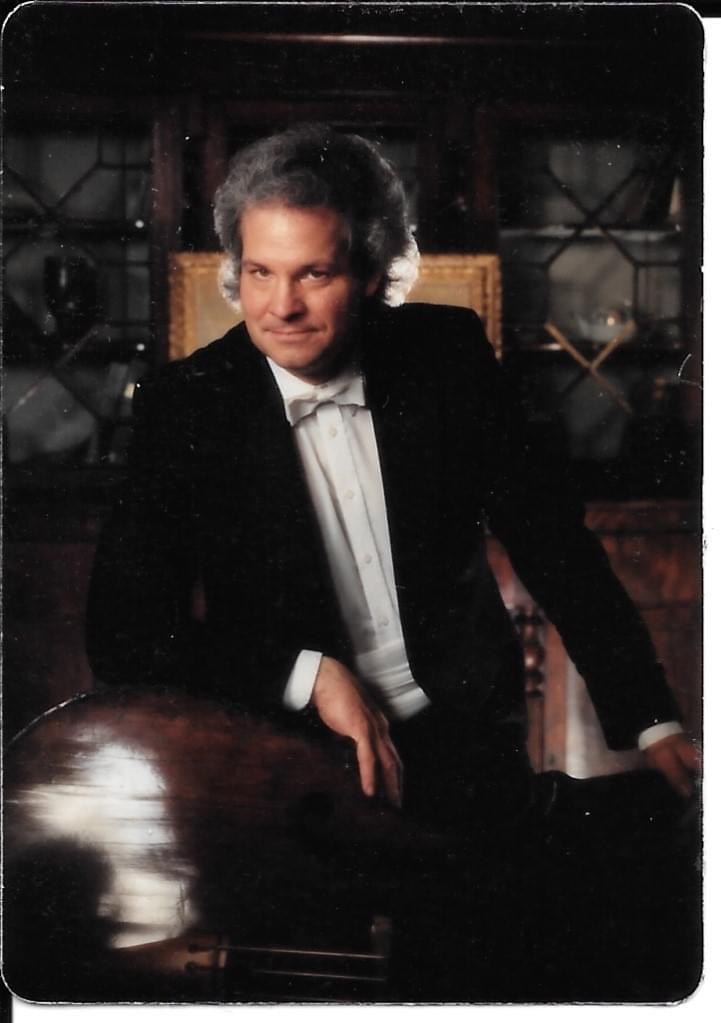
We also played in the Santa Fe Opera. I played there with Hal Robinson and Paul Ellison. For several summers, that was the section. Paul was principal, I was assistant, and Hal was third. He was just getting into the business. It was one hell of a bass section.
Jason: Yeah, no kidding.
Jack: We’d be standing there playing Don Carlo, and it was quarter to one in the morning. The opera didn’t start until nine, because it didn’t get dark out there until that time. You just have to learn to stay up, stay attentive. Opera, even more than symphony, teaches you about that sort of thing, and teaches you about endurance.
We, we would play Salome, and it lasts an hour and a half, no intermission. There are a lot of notes in there, there’s a lot of counting, there’s a lot of playing, a lot of technique, and you just have to stay with it. Opera is baptism by fire.
The bass plays such an important role in opera. You’re really in a lot of eye contact with the conductor, because you start and stop the orchestra a lot and the singers listen to the basses. Whether it’s Salome or Tosca, they’re, they’re taking their cue from that downbeat.
Then I got into the Detroit symphony, and decided not to take the job. A little over a year later, I got into the Houston symphony. There again, I played with Paul and I played with Hal in Houston. In fact, I sat on a stand with Hal for a whole year.
He is an excellent player, just excellent. He’s just such a presence in an orchestra. I really enjoyed sitting with him. Paul is an excellent player, and the three of us really made a really rock solid section. We all enjoyed the music and it was great. Of course, Hal went on to play principal in the National Symphony and then principal in Philly, as we all know.
North Carolina Symphony & Teaching
Then this principal bass opening came open in the North Carolina Symphony, and they talked me into auditioning for it. So I auditioned, and I came here and played principal for 18 years, and then left the Santa Fe Opera and began teaching at Interlochen.
The orchestra here in North Carolina is a pretty big job. It’s a wonderful community. We raised our daughter here, and it’s been great. Then, after going to Interlochen for many summers, Michigan State called me 12 years ago and wanted me to join the faculty. I I’d thought I’d really like to do that, because I always loved teaching and I always had a university affiliation when I was in Houston. I taught at the University of Houston. I taught at East Carolina and Interlochen and all that, so I decided, at age 51, it would be a great time for me to go into teaching full time. I talked the dean into letting me commute, so for the past 12 years, I go up there and I teach three days a week.
I go up on a Monday and come back on a Wednesday, so I’m really only gone from home totally one day. I have a wonderful class there.
Jason: That’s an interesting setup, doing that kind of a commute for 12 years.
Michigan being a state known for its heavy snow, you must have had some interesting times getting out there during those 12 years.
Jack: You know, that’s exactly right. Some weeks I hardly noticed the trip, but boy, if it’s snowing,..
The problem with that being stressful is you have to be there. I leave an hour or so playtime in case the plane is late or whatever, but going is stressful, because I know I have to be there and I know I have to start teaching. And if there’s a glitch, I start getting stressed out.
Believe it or not, I’ve only been stuck three times in 12 years.
John: Hey, Jack, I have a question here. When you decided that you were going to leave the orchestra, was that a difficult decision? After a couple of years, did you miss that? I know a couple of people that went into teaching full time, and it was kind of an interesting, almost kind of like a separation anxiety.
Jack: Well, yeah. I think for anybody that leaves the orchestra business and goes into teaching like that, yes, there is a period of adjustment. Although, there are 15 weeks in a semester, so there are three weeks that I don’t go. And the symphony still offers me playing time with them, so I’ll go in and play about six to eight weeks with them a year.
So it’s not like I’m out of the orchestra, not playing at all. But yes, I missed all my friends, and I missed the daily routine. Performing was the first thing I did in my life every day, and the teaching fit around that.
Suddenly, it just completely flip flopped. Teaching was the thing I did every day and I performed around that. So it was a complete reversal, but I was a little bit lucky, because in my case, I still continue to play. I didn’t really have to give it up completely.
Also, teaching is totally giving. Playing is totally giving, but you’re totally taking too, because you’re producing something yourself that you put into something else. In teaching, you’re promoting your students.
I don’t promote myself. It’s not all about me, it’s all about them. I think unless you’re going to be that way, you really shouldn’t teach. It’s about how well they’re doing, not how well you’re doing. The way I look at it, it’s a service oriented thing.
When you’re playing, it’s all about you. It’s a different mindset. It’s not for everybody, but I love to teach and I always had done it. In fact, I, I taught at Indiana University for seven or eight years during the summer. Larry Hurst and I used to fly back and forth. We team taught down there.
Think some people get into teaching, and they find that it’s not what they want to do and rather just play all the time. Some people get into teaching to get out of the orchestra. And that’s not a good enough reason to do it. You’ve got to get into teaching because you want to be in teaching. I think that’s an important decision.
John: I have some of my younger students, they play The Happy Bass Player. I know that’s a piece you wrote, and I use it a lot to get people to shift up to a fourth finger A and fourth finger D.
Can you elaborate a little bit about that piece and what kind of teaching materials you like to use?
Pedagogy
Jack: I would like to do some more writing for young students. The problem with me, that’s always been the problem, but especially now, is that I just thought that up in my head. I make up a lot of music in my head, and someday, I should start writing it down. To this point, that’s the only piece I’ve written.
As far as teaching materials, boy, that’s a three or four hour conversation. I think a lot of what’s out there now is good, but I don’t really adhere to any particular method.
It all depends. I think extensions and pivoting and things like that are really, really good. But they work on certain size basses and not on other certain size basses.
Jack: Then there’s different kinds of strings. You have a really light gauge strings, which are really easy for the bow to move around and they’re great to play on, but it’s hard to take auditions on those, because the sound isn’t full enough or powerful enough. It depends upon what you’re doing and what kind of an instrument you have.
I think Petracchi is good. I think the Rabbath method is good. I think the Streicher method is good.
There’s a lot about Bille that’s valid. I like Gradus ad Parnassum. All those things are technique builders.
With a lot of the technical stuff on the bass, it’s really kind of reinventing the wheel in a way. The Italians that four finger system 150 years ago. They were trying that, and it just didn’t work out. Mostly because of the string length.
When Stuart Sankey was alive, he was very high on using the thumb in the lower positions, which I like very much. I thought he had a great idea there, but you had to sit down to do it. I sit in the orchestra and stand when I play it by as a solo instrument, but you can’t have a technique which you can just use sitting or because we do both. What happens if you go to an audition and you don’t have a stool?
I think the most important thing a young bass player can do is learn good hand spacing. That’s a lot of what I see missing. They get all over the bass, but sometimes it’s not always in tune, because the hand collapses when they shift, or they’re not sure the distance between one note and another. That’s always been an issue and the bass, and it still is.
I think it’s a good idea for younger players to spend a lot of time playing thirds, especially around the neck area, because it forces the hand to be a good hand position or it’s not in tune.
For some kids, the first introduction they have to thirds is the Koussevitzky Concerto. So they get the smelling salts out trying to play this passage, and they really haven’t played thirds before.
It’s hard to hear down there, and it’s hard to keep that hand open. So things have changed greatly, in many ways, to the good, and in other ways, they haven’t changed at all, you know. We’re still going over the same things
[Laughter]
Jack: You have to be an excellent soloist to get a job, because the solos are their first introduction to what you really play like. The days are gone–and they’ve been gone for a couple of decades–where people just study excerpts. It’s got to be much more than that now.
I think there are a lot of players out there who learn excerpts, and they think that if it’s in tune and in time, that’s the end, and they can get a job like that.
I don’t quite agree. I think when you’re going to play a Mozart excerpt, or Beethoven excerpt, it’s pivotal that you have to keep in mind that you’re demonstrating rhythm, you’re demonstrating intonation, and you’re demonstrating sound and dynamics. And you’re demonstrating the style of those composers. That all has to be there, or you’re not even in the hunt.
But past that, I think it’s a good idea to play them with a soloistic point of view, so it’s, it’s not boring to hear. I remember Lynn Harrell telling me, when he was principal cello of Cleveland, that George Szell decided that one of the cellists wasn’t up to it. So he filed dismissal charges on the guy.
One thing you could do to help yourself back in those days was play an audition for the conductor. The cellist came up to Lyn Harrell and said, “Lynn, what am I going to do? I haven’t played by myself in close to 30 years. Would you help me?”
Harrell said, “sure.”
They went over some excerpts and he says, “what do I do here?”
Harrell said to him, ” well, I think what you need to do, you can play these excerpts, but you need to go home and pretend you’re playing a recital for him, and look at these excerpts from a soloistic point of view. “
And the guy did. He went home and spent a few weeks, and came in and played for Szell, and he passed. He didn’t fire him.
On Audition Committees
I’ve sat on enough audition committees, and I’m here to tell you, everybody sounds like everybody else., and then all of a sudden somebody comes in, and it’s refreshing to hear. There’s some personality in it. They’re holding true to the style of Beethoven and Mozart or Brahms. That’s there too. But there’s a musical ambience about it. It’s a soloistic feel, a little bit. And that gets the attention of the committee.
The last thing you want to do is play those excerpts the way you play them in the orchestra. Because when you play them in the orchestra, if you were to play an excerpt like that soloistically in the orchestra, everybody would be turning around. Because you have to blend in with everybody else. And it should sound like really one bass section. You’re trying to stay out of the way in terms of sticking out in any way, length of notes or personality, vibrato, things like that.
But when you’re playing by yourself, you should do that. I think that’s a very important component to auditioning. Very important. And it’s not talked about too much. Mostly, what’s talked about is perfect intonation, demonstrating rhythm, demonstrating style of the composers. But that other component is very important to making you separate from other people that are auditioning, and for many people that’s what’s missing in their audition.