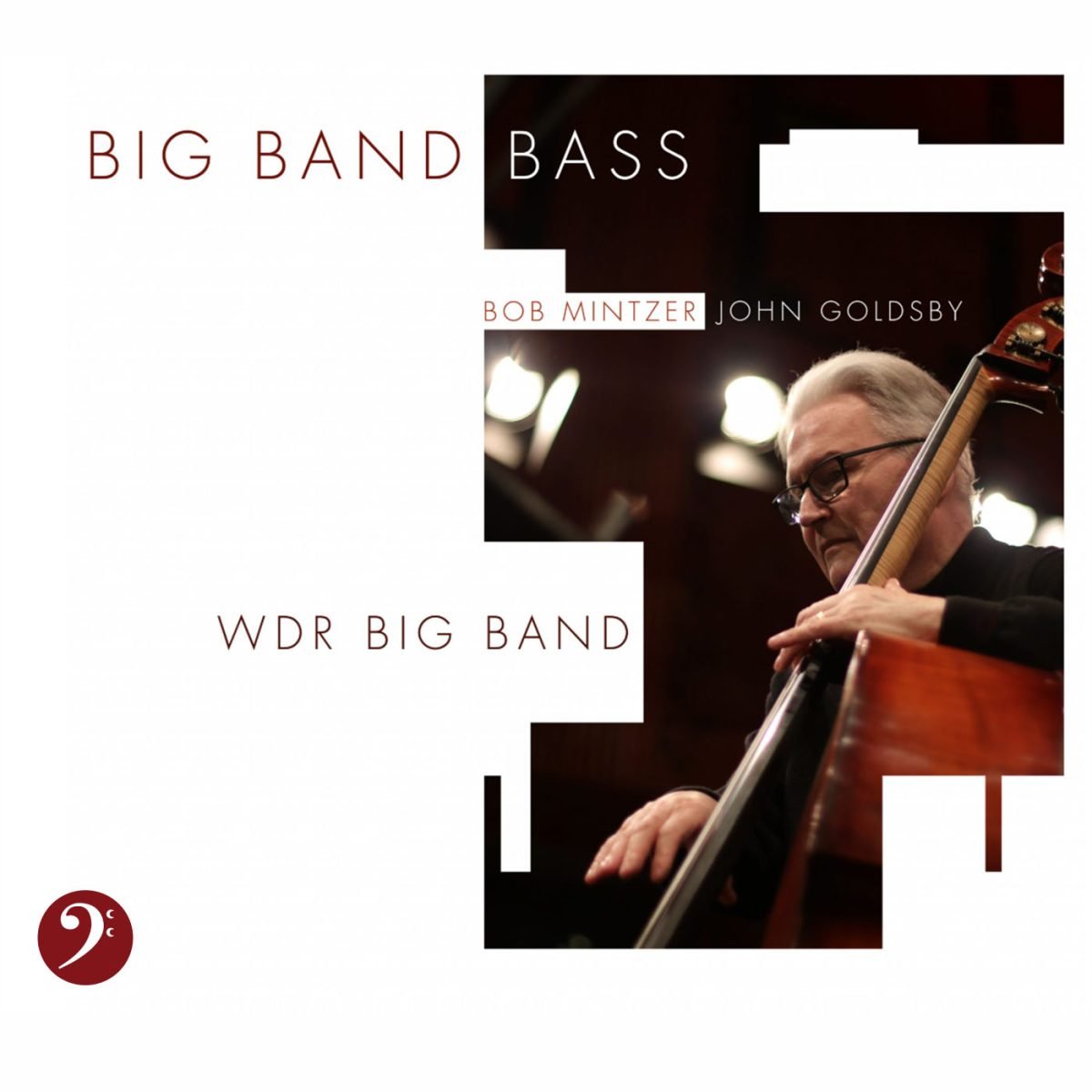
John Goldsby returns to the podcast to celebrate Big Band Bass, a project that spotlights the double bass at the front of the band alongside the legendary WDR Big Band and arranger/conductor Bob Mintzer.
We talk about what it felt like to close a 30-year run in one of the world’s rare full-time jazz ensemble jobs, and how stepping away has opened up space for hand-picked gigs, home projects, and new recordings. Listen to a recording of this podcast on the Contrabass Conversations Podcast.
The New Album, Big Band Bass
Jason: I’ve been listening to the album, and I found a nearly two-hour set on YouTube with Bob conducting the band and a lot of your tunes.
John: That was my final concert with the band.
Jason: Okay, so that was your swan song.
John: Exactly. That same week, we recorded the album in the studio. Great experience.
Jason: I was wondering, because those two things sound so close to each other. What lovely compositions, and the band is amazing. I feel a real connection to it because I actually got to sit in on a rehearsal and see you do your thing. Really, really cool project.
Life After 30 Years in the WDR Big Band
Jason: Indeed. Well, I want to talk about the album, but I also want to catch up — what’s it like not being in the WDR Big Band? You’re coming up on about two years out now.
John: It’s been a solid year and a half. I was with the band for 30 years — I joined in 1994. And as you probably know from playing with orchestras, it sort of becomes your second family. I was in that same studio room you visited, Monday through Friday, rehearsing and recording for 30 years. The time just crept up, and technology changed along the way.
At first, we were a radio big band — mostly doing shows that would be broadcast for listeners in this area of Germany. Then it expanded. And when the internet really took off, we started making videos of everything. In the last ten years or so, most of our projects ended up on video.
It was strange leaving the band, but I felt like I had made my mark. I contributed, I was part of the sound of the big band, and I was still playing well at the end. So I thought, okay, this is the time to stop and pursue other things. It was a great 30 years, and now it’s also great not having to go to work every day.
Jason: What a rare thing that is. You can count on one hand how many jobs exist for a jazz musician like that — performing jazz, not in academia. It really is the jazz equivalent of an orchestra job. I look at some of the San Francisco Symphony guys — one of them has been there 45 years, sitting at the same angle, looking at the same conductor’s chair. I talk to most jazz professionals, and they say their schedule is total chaos. To have that kind of stability as a jazz performer is genuinely rare.
John: At the WDR, we had a jazz big band, a symphony orchestra, a radio orchestra, and a choir — all on salary. That’s something that grew out of the German constitution after World War II, the idea that culture and entertainment needed to be provided for the people. There are still three radio jazz big bands in Germany: ours in Cologne, one in Hamburg where great bass player Ingmar Heller holds that position, and the HR Big Band in Frankfurt, with the fantastic Hans Nik on bass. My replacement in the WDR Big Band is Sam Ning, a great bass player from Australia. Time moves on, new players come in, and it was a wonderful situation while it lasted. Now I’m enjoying doing other projects — still exploring, still playing, just not on that regular orchestra schedule.
Jason: What were the rehearsal hours? I know they were quite regular.
John: Usually 10 o’clock to 2:30. Sometimes there would be a double rehearsal day, 10 o’clock to 6. They’d rehearse and record a project, and then every week or two, do one, two, or three concerts — recorded on video or made into an album. The guests and conductors were ongoing. The main conductors were Bob Mintzer, the saxophone player, and Vince Mendoza, a Los Angeles composer and arranger, but there were also a lot of guest conductors and soloists. Quite an experience.
Jason: So now that you have that 10 to 2:30 — or 10 to 6 — block free, plus the commute, after years of an extremely predictable schedule, how does your week unfold these days?
John: I still do gigs — a handful every month rather than a lot. I pick the ones I want to do. I have a few students come to the house, but not too many. And it seems like I’m always full of projects at home. Just yesterday I mixed a new album for a quartet I’ve been working with — Stefan Bauer, a great vibes player, my old buddy Terry Clark on drums, and Matt Halpin on saxophone. I’ve got projects like that, not big band projects, but the music I like to play and the music I want people to hear. Still as busy as I want to be, but with plenty of time to relax and do things on my own terms.
Jason: That sounds fantastic. Speaking of the album — I was listening to that last concert on YouTube, and you sound incredible. There’s a moment, I think you’re playing in octaves with the bass clarinet, and your intonation is just spot on. Really beautiful album.
In the YouTube video, Bob discussed some of the origins of the tracks. Are all the tunes on the album yours? I think one of them isn’t an original, but everything else is, right?
John: Right. The first tune was written by Vince Mendoza, our composer-in-residence. He called — well, he sent me an email — and said, “John, I’ve got good news and bad news. The good news is I’m writing a bass feature where you’re out front, accompanied only by flutes. The bad news is I’m writing a bass feature where you’re out front accompanied only by flutes.” He’s a wonderful composer. That piece opened the second half of the concert and became the first track on the album — it’s called “Sonatina,” a very tiny sonata.
The rest of the tracks were my tunes, arranged by Bob Mintzer. I like to compose, but I keep it simple — jazz-player-style. When a tune fills up one sheet of paper, I figure that’s probably enough. Bob turned them into real, intricate works of big band music.
One of the great things about that big band job was working with visiting arrangers over the years. I was always part of the arranger’s process — I could see what they wrote for the bass, where they left open space for me to improvise, and where they didn’t. A real honor.
On the record, Bob arranged five of my tunes. There was also a tune arranged by former WDR trombonist Dave Hofler — my tune “In the Hills” — and one arranged by Michael Linné called “Sergio,” the last track on the album, with a Brazilian two-three bossa nova feel. A huge honor to have these people work on my little ditties, my little tune ideas. It came out great.
Jason: It must be such a cool experience to have something you wrote arranged by those kinds of musicians. I have so much respect for jazz arrangers. I remember there was a jazz arranging course at Northwestern that I didn’t take and always wished I had.
John’s Composition Process
Jason: I’m curious — when you compose, do you work at the piano or at the bass?
John: Usually at the piano. Sometimes I’ll think, “I need to find a cool bassline,” and I’ll go to the bass and mess around there for a while. A lot of the lines I compose at the piano don’t always sound great on the bass — they sound good to me on piano, but when I go to play them on the bass, they’re a little awkward. That doesn’t mean they’re not musical; it just means I haven’t fully explored them on the bass yet. So I like to write at the piano, then figure out how to interpret it on bass. Sometimes I’ll find a bassline and go back to the piano, but mostly everything starts on piano.
Jason: I have a question about the title of one of the tunes — “You Can Call Him Maestro.” I smiled when I saw that. In orchestras, that’s still what you say when you don’t know the conductor well. Can you tell the story behind that tune?
John: In the jazz community, I’ve noticed that people have started calling each other “maestro.” It’s a sign of respect — tongue in cheek, but genuine. You’d say to another bass player, “Maestro, how are you? You sounded great at the last concert.”
But the real story is: my wife is a pianist, and she had a gig at a luxury hotel in Baden-Baden, Germany — a beautiful place with spas, hot springs, saunas, and a gorgeous concert hall, the Festspielhaus. I’d go down there with her for a month or two at a time. While she played piano in the evenings, I’d go to an empty ballroom and compose on the piano.
Over the years, I attended many concerts there with different orchestras and maestros — and those conductors often stayed at the hotel where my wife, Robin, was performing. I’d see them in the hallways, and I couldn’t always keep all the names of these very serious classical conductors straight. So I’d just say, “Maestro! The Brahms last night was outstanding.” That’s where the title came from — you can call him Maestro if you don’t know his name.
I’ve also noticed that jazz players have started using it with each other, which I find hilarious and endearing at the same time.
Jason: I love it. I’m playing a rehearsal later today with a jazz bass player here in the Bay Area. I’m going to call him Maestro and see how he reacts.
John: Let me know what he says.
On Gänsler Double Bass Strings
Jason: So I have a lovely memory — this will lead into a question about your bass and setup. I had a few free hours while I was staying with you a few years ago, and I practiced on your bass. I remember the strings. Were those the Gänsler strings?
I’ve played on a few basses with Gänsler strings, and they’ve all been a little different. I think I had about two hours that morning. I had my bows with me, so I was really sinking into the instrument. It was hard to describe, but it almost felt like I was playing a different instrument than my own. Can you talk about how those strings came into your life?
John: He lives in Berlin, and he used to be the person who made the Velvet Anima strings — a Swiss company. About 15 years ago, many jazz players were using Velvets because they had a gut-like feel. I think some of them were partly gut, but mostly silk-core strings wrapped in a special way. He eventually left Velvet, went on his own, and started making the Gänsler strings.
Gerald is an incredible artisan. Every year, he comes out with a completely new lineup. If I have the 2022 all-purpose strings and I call him up, he says, “No, it’s 2023 — we completely redid the strings. Much better model now.” The same thing happens every year after that. If you go to his website, there’s an extensive description of what each string does and what it’s suited for. He’s like a mad scientist with strings — always coming up with new tweaks.
What I love about them is that they’re very true in pitch but have this gut-like feel. Silk-core strings that feel soft and responsive. When you hit a note, it’s this warm, round sound. You can also bow them well, though he makes other strings more suited for orchestral playing. To buy a set, you basically have to contact him directly. They’re not the cheapest strings, but they’re wonderful.
Jason: It’s like buying a Ferrari. I remember the strings on your bass in 2022 were thicker than I was used to and had that gut quality. Then I played on Barry Green’s bass the following year, and his were super-thin Gänslers — same maker, very different feel, but similar tonal quality. I was playing arpeggios on your bass, mostly with the bow, and I really loved the hand feel and the response. Warm and inviting.
Is that what you recorded the album on? Probably not the 2022 strings, but Gänsler strings?
John: Actually, no. That album was recorded on a German bass — a Björn Stoll German bass — with Spirocore light-gauge strings.
Jason: Oh, really!
On Light Gauge Spirocores
John: Yeah. I started using Spirocore light gauge in the early eighties. That’s my go-to. I’ve tried all kinds of strings, and each has its advantages. But right now I have one bass strung with Spirocore and one with the Gänsler strings.
Jason: I can totally hear that now that you say it. How did you settle on light-gauge Spirocore? I’m getting older and appreciating lighter strings more and more. Someone recently talked me into heavy-tension strings, and I’ve been asking myself why ever since. I feel like I’m using 25% more energy just to play the bass.
John: When I first moved to New York, I started taking lessons with Dave Holland after a couple of years. He was using Spirocore light gauge, and I thought, well, if they’re good enough for Dave… I put them on, and they just felt looser and more open than the medium orchestral strings or the heavy Stark gauge. The heavy strings might be louder, but I don’t necessarily need more volume — I’m usually playing amplified anyway. With age, I’m playing a bit lighter, but still attacking the notes and trying to get a big sound. The Spirocore light gauge does a great job. And honestly, I don’t have the patience to go on a string search.
On Amplification
Jason: Fair enough. There’s always another string out there, but it’s nice to have your go-to. What about amplification? What were you using on the album — or were you just mic’d?
John: With the WDR, I almost always recorded with just a microphone — a Schoeps MK 41, a hypercardioid mic that doesn’t pick up much bleed. They’d even put a screen in front of it, like a vocalist’s reflection shield, to keep the other instruments from bleeding into the bass mic.
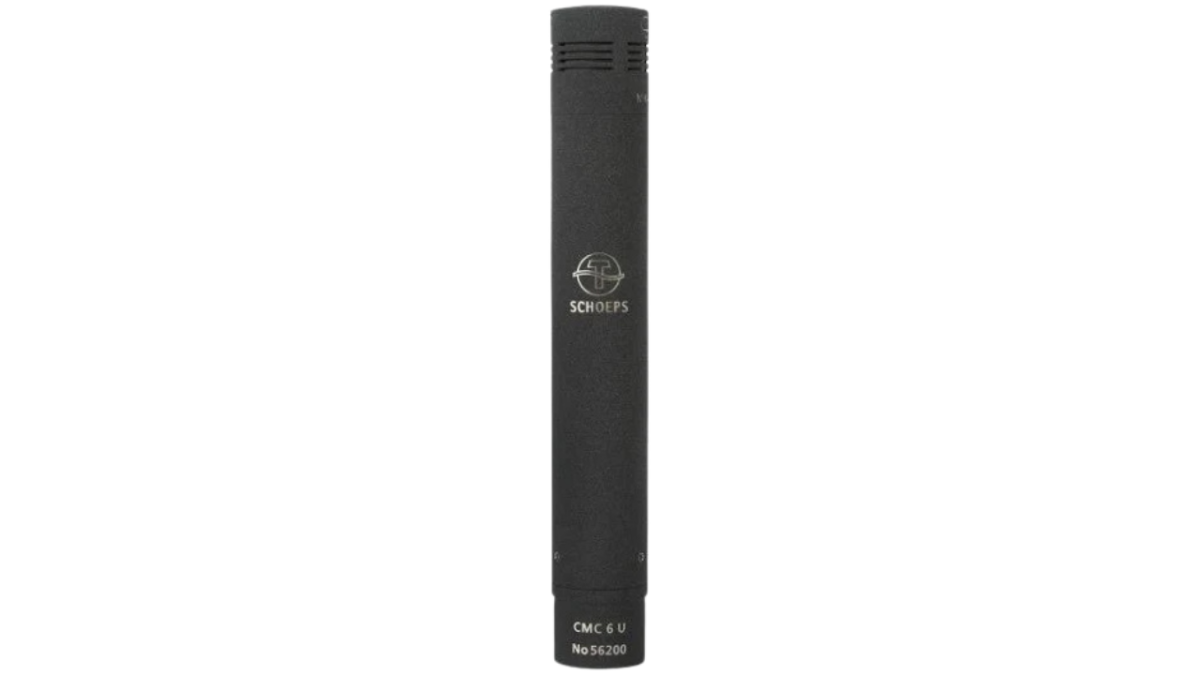
I did have an amplifier on stage, though, because a lot of the horn players don’t want monitors — they want to hear the bass coming from the stage itself. The amplifier was the easiest way to solve that. I used a Fishman Full Circle pickup, which is uncomplicated and sounds warm. But for recording, it was all a microphone. That was my setup for years in Studio Four — the room you visited.

John Goldsby's pick up of choice!
Jason: If it works, it works — and it sounds great. I noticed in that final concert video you were wearing in-ears. Is that a mix in the band?
John: Yes, it’s a mix. The drummer, Hans Dekker, always used in-ears, and so did I. The advantage, especially in a big band, is that it keeps the stage from getting loud. I’d just dial in a little piano and a little of the soloist from the front mic, and that was it — no wash of sound from big wedge monitors on the floor. Horn players, on the other hand, tend not to like in-ears. When you put something in your ears, you hear everything resonating inside your skull, and that freaks a lot of them out. So some do, most don’t.
Jason: I rarely play gigs that require in-ears, but I was subbing on a Broadway show about a year ago, and the regular bassist used them. I decided to try practicing with in-ears at home beforehand — put a microphone right on my bass and listened back — and I’m so glad I did, because the sonic experience is really different. It’s incredibly useful to have the mix right there, which takes away the unpredictability.
Jason: When did you start using them (in-ear monitors)?
John: For the first few years with the band, I had no ear protection at all. Big bands are loud. Eventually, the drummer John Riley — who always wore earplugs — said, “You have to protect your ears, you’re going to go deaf.” So I got molded earplugs with 15 dB filters.
That takes a while to get used to. At first, you think, “Am I in tune? Can I even hear myself?” But after a month or so, things actually start sounding clearer. Then, about 10 or 15 years ago, the drummer and I started experimenting with in-ears. The band was also going through a period where everyone was debating — let’s say discussing — how loud it was on stage. The drummer and I proposed trying in-ears to reduce the wash, and it worked. They’re really useful in certain situations, especially when you have a click or someone giving you cues through headphones.
Jason: Rock musicians use them a lot for that reason, too, especially when you’re changing venues and the acoustics are unpredictable. Having that consistent, controlled mix in your ears is a real advantage.
John: And at the WDR, it was a luxury — we had a front-of-house sound engineer and a dedicated monitor engineer on the side. In my last few years, I barely had to say anything to the monitor guy other than “how’s it going?” He always had my sound dialed in just right: a little of myself, a lot of piano, the soloists, a touch of the horn section. Like listening to a nicely mixed album in my head.
John’s Discover Double Bass Courses
Jason: That’s the dream. I wanted to ask about your Discover Double Bass courses. I try to keep up with what Geoff Chalmers is putting out, and I didn’t realize you have six courses out there — that’s remarkable. I remember you walking me through the experience before I went to the UK to film my classical course, which was really helpful. And a few years ago, I had the pleasure of showing Geoff around San Francisco when he came through to film.
One of your more recent courses was ear training for the jazz musician. Can you tell me about that one?
John: Geoff approached me about it, and I have my own ideas about ear training for jazz players. The core of it is being able to hear something in your head and immediately transfer it to your fingers. Jazz players and classical players are so used to reading that it adds an extra step between hearing and playing.
A classical player might look at the note and move to where they think it is on the fingerboard — but are they really listening to whether it’s in tune relative to everything else? Jazz players do the same thing: “It says C major seven, my finger is right here, must be right.” But there are a lot of things we can do to train our ears, to close that gap between what we hear internally and what comes out of the instrument.
My approach is a kind of backward method, but a very natural one: take songs you can already sing and apply them to finding those notes on the bass.
Jason: I haven’t gone through that course yet, but I’m going to start now. I’ve been working through some of your other courses. The last few years I keep getting pulled into jazz gigs — I’d never call myself a jazz player, but it happens enough that I figured I should keep the calluses up. My father-in-law, who played electric bass, gifted me some really sweet electrics — I think there’s a ’61 P-Bass in there — so I’ve been trying to play a little jazz every day. I remember playing “Giant Steps” on electric bass incredibly slowly, and my wife was dancing around in slow motion as it gradually got faster.
In a classical context, I spend most of my time watching the music, the principal bass, and the conductor, then listening to verify. So the ear-first approach will be a nice change of direction.
John: One of the chapters in that course uses Happy Birthday as a demo lesson — something I have students work on. Everybody knows that tune cold from singing it since childhood, but playing it on the bass is trickier than it seems. You go through it step by step: here are the intervals, here’s the arpeggio, here’s the five chord going to the four chord and back to one. And then you practice doing it spontaneously in every key.
It sounds like a silly exercise, but once you can play Happy Birthday in any key, it’s a real badge of honor. No matter where a birthday party starts singing, you can jump in.
Jason: I’m glad to hear you say it’s tricky, because I’m always surprised by how badly I remember the intervals. I know we start on D in the orchestra, and that’s about it.
John: That’s a great starting point.
Jason: Well, I love the album, and congrats on a year and a change of retirement from the band and onto new projects. Anything else you want to say for the 2026 edition of the podcast?
John: Just to thank you for the great work you’re doing. The interviews you put out are incredible. And I also love the Simandl course you did with the 30 études — those are études I’ve played for decades and still go back to when I want something solid and clear. They’re not easy, but they’re not too hard either. Great idea to put those out.
Jason: That means a lot, thanks. It’s funny — I don’t spend much time in the lower register playing melodies in my normal work, so working through all of those was actually a really interesting experience.
John: Right. Other than that — thanks for the chat, thanks for all your hard work, and let me know if you’re back in Germany. We’ll keep in touch.
Connect with John
We discuss topics like this every week in our email newsletter. We also offer free monthly sheet music giveaways, community news, and all sorts of cool opportunities for bass players. If you’re not on the list, consider subscribing!